If you've ever tested a "perfect-on-paper" activewear top and then watched it fail during a real workout (clingy underarms, sweaty back, heat-trap feeling, or seams that irritate), you already know the real problem: the wrong fabric in the wrong zone. For a broader foundation on stretch fabric properties before diving in, explore our activewear fabric guide or browse our full fabric guides hub.
Research on upper-body sweat distribution during running shows sweating is highest along the spine and higher on the back overall than the chest, which is exactly why many performance brands "body map" ventilation into back panels.
What Is Mesh Panels for Activewear?
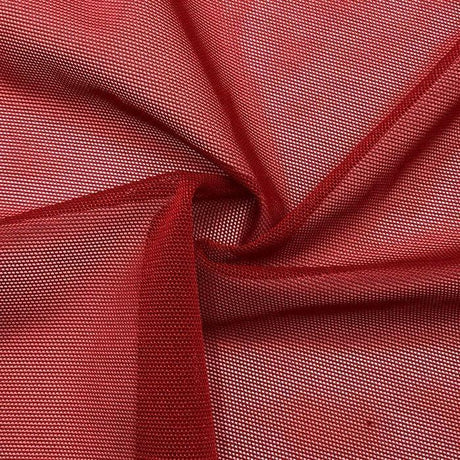
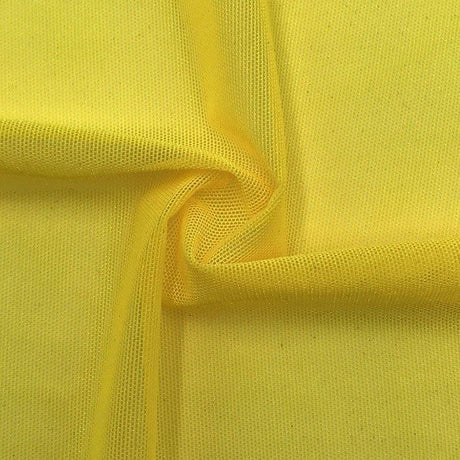
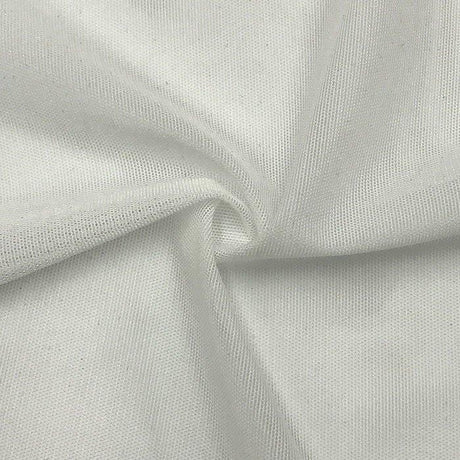
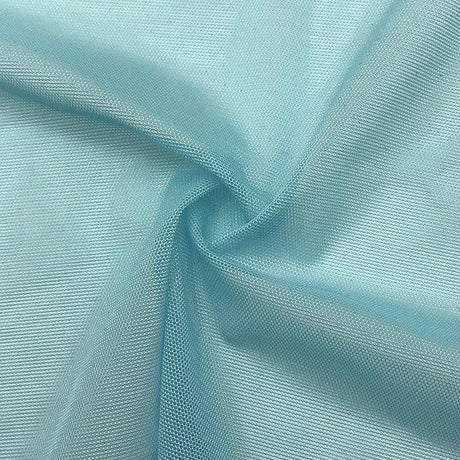
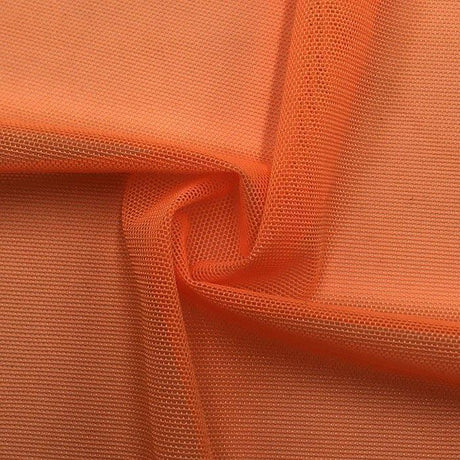
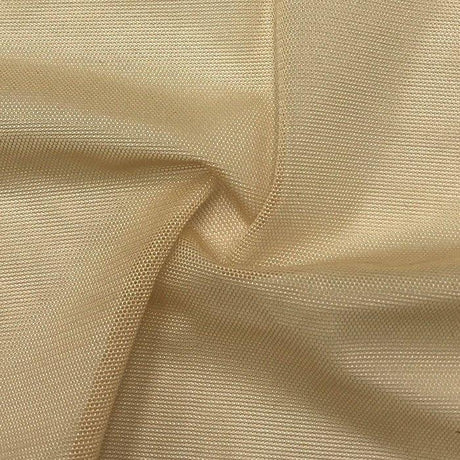
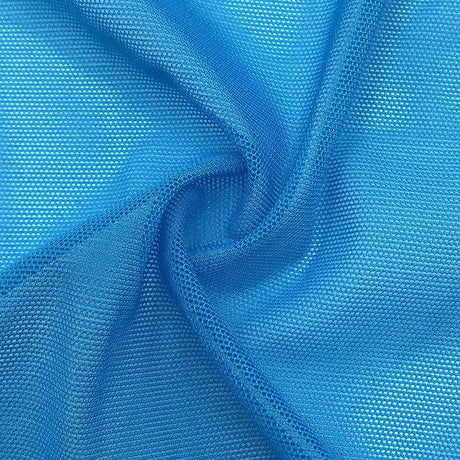
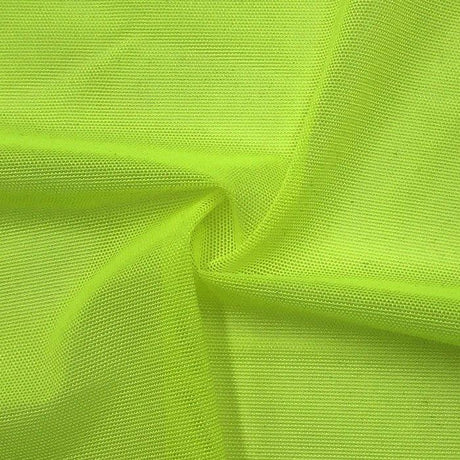
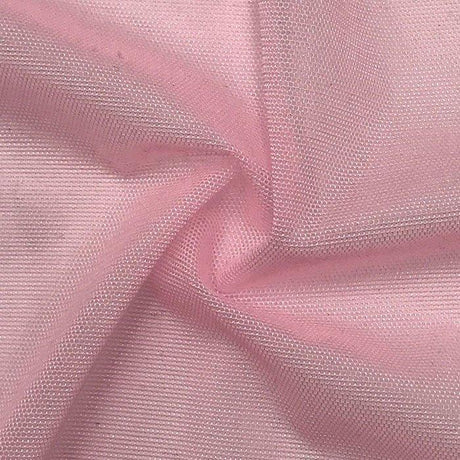
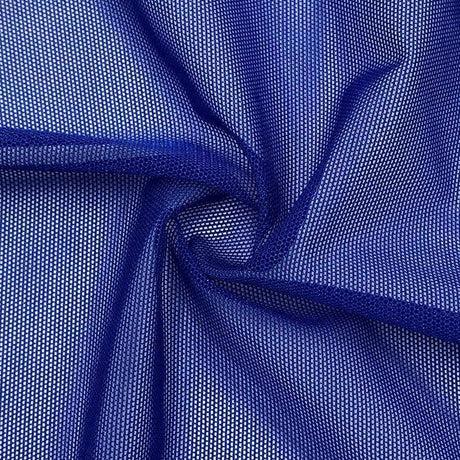
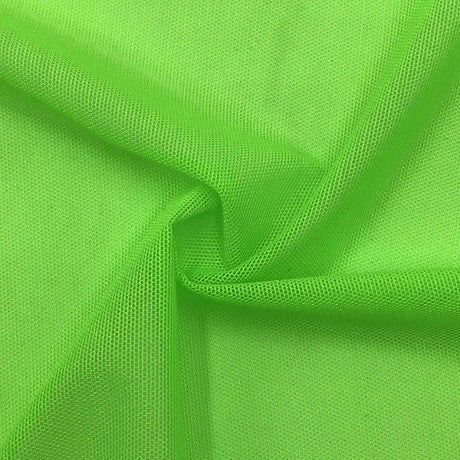
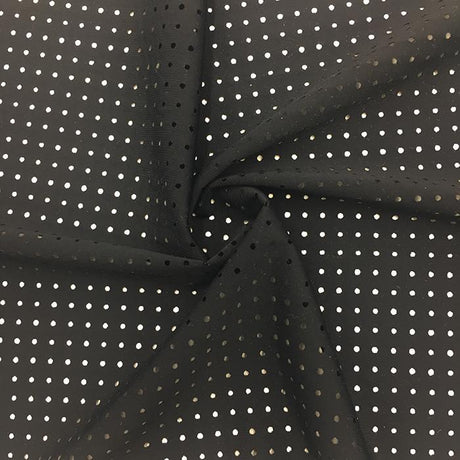
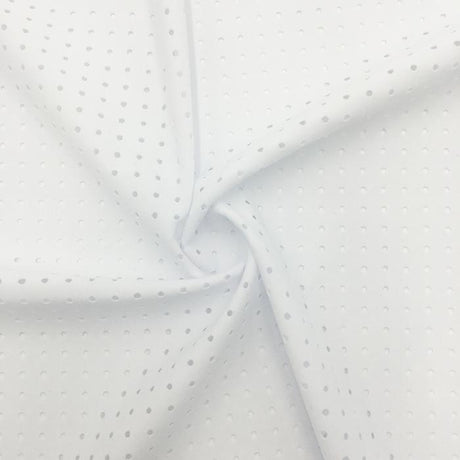
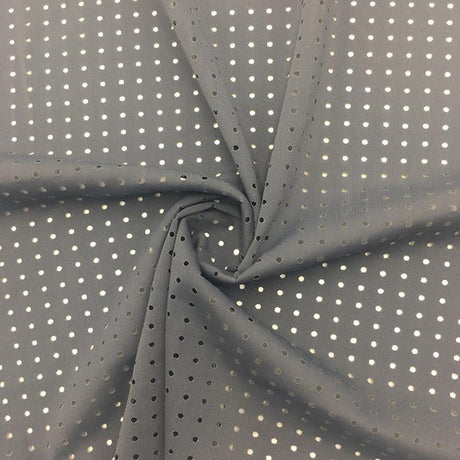
Mesh panels for activewear are strategically placed fabric inserts (commonly underarms, upper back, and center-back "spine" zones) made from open-structure textiles designed to increase airflow and accelerate moisture evaporation. Unlike solid knits, mesh uses an open knit or perforated construction that naturally boosts ventilation—making it ideal for heat-mapped paneling in tops, sports bras, base layers, leggings accents, and linings.
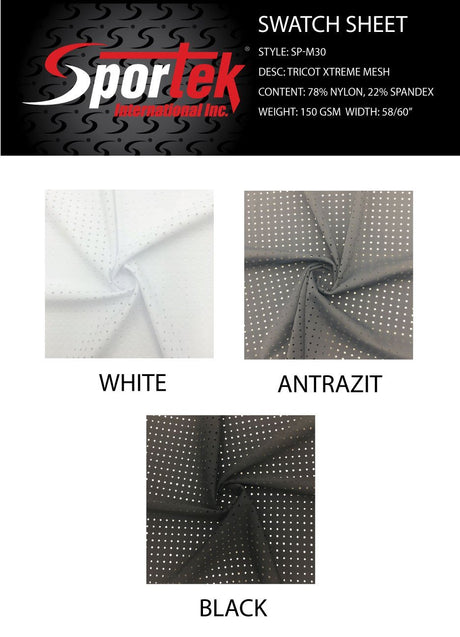
Stretch mesh (mesh + spandex): These are breathable, lightweight meshes designed to move with the garment. Stretch mesh is highlighted as versatile, breathable, and lightweight for products like workout garments and swimwear. Our nylon-spandex fabric guide covers how nylon-spandex mesh constructions achieve the combination of breathability, strength, and 4-way stretch that defines quality performance mesh.
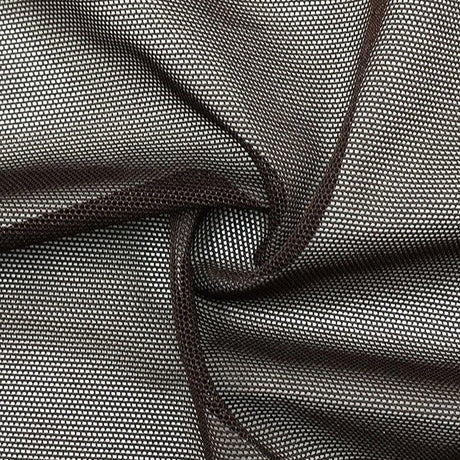
Sport micro mesh (often 100% polyester): This is the classic jersey/lining-style athletic mesh: lightweight, breathable, stable, and great for ventilation zones or lining layers. For example, SP-MS1 is described as 100% polyester with a 95 GSM weight and a 61–62 inch width, positioned for breathable sportswear and lining use.
Power mesh / support mesh (often nylon-spandex): Power meshes are typically denser and used when you need both breathability and support/compression—common in sports bras, shapewear-style panels, and high-recovery zones. The open knit structure drives flexibility and breathability, often engineered for supportive stretch behavior.
How mesh differs from related fabrics: Compared to solid nylon-spandex, mesh prioritizes airflow and cooling, while solids prioritize coverage, opacity, and often higher abrasion resistance in high-friction areas. Compared to moisture-management jerseys, mesh's open pore structure can increase air exchange, while moisture-management jerseys may focus more on liquid transport and drying speed through finishes and fiber/yarn engineering. Compared to fleece or brushed-back knits, mesh is for ventilation; fleece is for insulation and warmth layering.
Key Performance Characteristics That Matter in Venting Zones
Stretch & Recovery: Mesh paneling must stretch with the garment—or it will either restrict movement or create stress points and seam failure. For DIY makers: perform a quick "bench stretch" check—mark 4" (10 cm), stretch to comfortable max for the intended use, and see whether it springs back smoothly or stays wavy (poor recovery). Our stretch fabric types page covers the step-by-step stretch and recovery testing methodology in detail, including how to calculate stretch percentage from a home swatch test.
GSM / Weight: GSM (grams per square meter) changes drape, airflow, opacity, and how "supported" a panel feels. Real product examples illustrate why GSM matters: sport micro mesh can be extremely light (example: 95 GSM in SP-MS1); bird-eye stretch mesh can be heavier and more covering (example: SP-2626 lists 175 GSM, with 4-way stretch and "flat-back bird-eye mesh texture" for ventilation while maintaining a smooth touch). Our fabric weight guide provides a full breakdown of how GSM affects breathability and durability across all common mesh constructions.
Breathability and Airflow: If airflow is your primary performance goal, the most direct measurable property is air permeability. In practical design terms: larger openings (eyelet, perforated, certain bird-eye structures) often increase perceived airflow; denser meshes can still ventilate but may emphasize stability/support over maximum air exchange.
Moisture Management and Drying Behavior: Airflow panels work best when sweat doesn't just collect—it needs to move and evaporate. AATCC TM195 evaluates a fabric's ability to transport liquid moisture, including wetting time, spreading speed, one-way transport capability, and overall moisture management capacity (OMMC). Our fabric finishes guide covers moisture-wicking surface treatments and how to evaluate their durability across all common performance fabric constructions.
Durability and Abrasion Resistance: Underarm zones are friction zones: arm swing + sweat + repeated washing. To avoid pilling and snagging, look for meshes engineered for performance wear. Nylon is widely recognized for strength and abrasion resistance relative to many other apparel fibers, which is why nylon blends show up in high-impact performance categories.
Softness and Handfeel: For underarm and near-neck back panels, softness is not a luxury—it's a performance spec. A mesh can be breathable but still feel "scratchy" if the yarns are coarse or the openings abrade skin. Favor smooth-face meshes (like "flat-back" constructions) for direct-to-skin areas.
Stretch Mesh vs Other Panel Options
Mesh Panels for Activewear (Stretch Mesh): Often poly-spandex or nylon-spandex blends; typically 2-way or 4-way stretch depending on knit. Best for underarm panels, back yokes, and side panels needing mobility + airflow. Breathable + moves with body; wide aesthetic variety (eyelet, perforated, bird-eye). Some meshes can snag; very open meshes may show underlayers or skin; sewing requires care.
Alternative 1 (Sport Poly Micro Mesh): Commonly 100% polyester (example: SP-MS1). Often lower mechanical stretch (more stable), depending on knit; great for ventilation panels/linings. Best for maximum airflow zones, jersey-style ventilation, teamwear, and lightweight linings. Extremely lightweight options exist (example: 95 GSM); durable and easy care. Less stretch can cause mismatch/puckers if inserted into high-stretch body fabrics; may need pattern adjustment.
Alternative 2 (Power Mesh / Support Mesh): Commonly nylon-spandex engineered for supportive stretch. High stretch with stronger recovery; often "firmer" feel for control/support. Best for sports bras, compression zones, and supportive linings with some breathability. Better shaping, stability, recovery; can replace some elastic structure in designs. Can feel warm if too dense for the zone; may reduce airflow compared to lighter meshes.
Decision note for mixed-fabric garments: Most activewear uses a solid stretch base fabric for coverage and compression, then adds mesh where cooling matters. Nylon-spandex is positioned as a staple for athletic wear and swimwear with elasticity and durability as a go-to foundation fabric. Our activewear fabric guide covers how power mesh panels are used in compression and ventilation applications across all common activewear categories.
Best Uses & Applications
Why Underarm and Back Panels Work: Sweat mapping research supports what athletes already feel: during running, sweating patterns show particularly high sweat output along the spine and generally higher sweating on the back compared to the chest. That means breathable back panels can target real physiological heat zones—not just add style lines.
Mainstream Apparel Categories: Mesh paneling is common in activewear tops (tank backs, raglan underarm gussets, side-back panels), leggings and shorts (behind-knee panels, side panels), sports bras (center-back "racer" panels, cradle linings, back strap junction reinforcement), and teamwear (jersey side panels and upper-back ventilation areas).
Panel Placement Blueprint:
A good starting layout: underarm (diamond gusset or curved underarm insert—improves range of motion + reduces seam stress); upper back / center back (vertical "spine" panel or yoke panel—targets high-sweat region); mid-back (optional expansion for endurance sports or hot climates—balance modesty and airflow).
Custom Prints & Fashion-Forward Builds: If your main body is printed, keep panels solid for contrast—or place prints only where distortion is minimal. Our sublimation page covers how sublimation printing bonds dye into polyester-spandex fibers to achieve permanent, saturated color, and our sublimation paper and sublimation transfer paper pages cover the complete printing workflow.
How to Choose the Right Fabric
Start with the Project Purpose:
If the goal is maximum airflow, prioritize air permeability (breathability) as your top spec. If the goal is airflow + stability, look for mesh that is still ventilating but offers higher GSM and a smoother/denser structure (e.g., bird-eye mesh with 4-way stretch). If the goal is support, move toward power mesh rather than open mesh. Our how to choose fabric guide covers what to evaluate when a physical swatch arrives, including stretch testing, opacity testing, and hand feel assessment.
Match Stretch Requirements to the Body Fabric: A common failure point: a high-stretch main body (nylon-spandex) paired with a low-stretch mesh insert. The result is rippling seams, restricted movement, or popped stitches. DIY shortcut: if the main body stretches 60% crosswise and your mesh only stretches 20%, you'll need to either change the panel fabric or re-draft the panel with more ease and different seam engineering.
Consider Weather and Use Conditions: Hot/humid training: prioritize airflow + moisture transport (mesh + moisture management). Cool weather running: you can use insulated bases (fleece-backed knits) and still add mesh panels for "dump zones."
Budget and Sourcing Reality: If you're buying by the roll or scaling production, spec what you can measure: GSM/weight, breathability via air permeability, abrasion resistance via Martindale, and moisture transport via AATCC TM195 concepts (or supplier lab reports). Have questions? Our expert help and advice page and FAQ are always available.
Common Mistakes to Avoid
Using the Wrong Needle (and Blaming the Fabric): Highly elastic knits and spandex blends often need a true stretch needle. A stretch needle design (medium ball point and features intended for highly elastic knits including Lycra/spandex) delivers cleaner results and fewer skipped stitches. Our how to sew stretch fabric guide covers complete needle selection, stitch type, machine settings, and edge finishing guidance for all common mesh and stretch fabric construction scenarios.
Ignoring Stretch Recovery at Seams: If the mesh grows and doesn't recover, you'll get baggy underarms and wavy back panels—even if the fabric feels great off the bolt.
Choosing the Wrong Stitch for a High-Stretch Zone: Underarms and back panels experience repeated extension. If your stitch can't stretch, it will pop. Flatlock is widely used for premium activewear because it reduces rubbing/chafing and stays flexible.
Skipping Stabilization on "Shifty" Mesh: Very open mesh can get pulled into feed dogs or ripple. Temporary stabilization (wash-away tape, tissue, gentle stabilizing approaches) prevents distorted seams—especially on curves like armholes.
Cutting Without Accounting for Grain/Stretch Direction: In knits, the "grain" is about stretch direction. A panel cut in the wrong direction can feel tight and look warped. Always align the panel's highest stretch direction with the body's movement path (usually crosswise around the torso).
Ready-to-Use Checklists
Fabric Selection Checklist (Underarm + Back Panels):
- Confirm intended function: max airflow vs airflow + stability vs support
- Check "next-to-skin" comfort (rub test on inner arm)
- Compare stretch and recovery against the main body fabric
- If airflow is the goal, ask for or test air permeability
- If the zone is high-friction, consider abrasion resistance expectations
- Validate GSM/weight and drape
- Order enough extra for testing, mistakes, and future repairs
Cutting + Sewing Checklist:
- Pre-wash (or at least steam test) before final cutting
- Test needle: start with a stretch needle for spandex-rich knits
- Test stitches: overlock for seams; coverstitch for hems; flatlock when you want ultra-flat comfort
- Use clips or fine pins appropriate for knits; avoid snagging open mesh
- Match seams with stretch direction and (if applicable) print alignment
- Do a "sweat simulation": wear-test or mist-test to see cling/opacity and drying behavior
Care & Longevity Tips
Washing: Wash cold or cool, use mild detergent, and turn garments inside out to protect mesh texture and reduce snagging. Avoid fabric softener if you depend on moisture-wicking performance—softener residue can clog fibers and interfere with wicking behavior in athletic wear. Our spandex care guide and fabric care guide cover complete laundering protocols for all common spandex-blend fabric types.
Drying: High heat is a shortcut to early elastane fatigue. Spandex/Lycra is among items that should not go in the dryer due to damage risk. Air drying is generally best for preserving spandex elasticity.
Ironing: Avoid high-heat ironing on mesh and spandex blends. If pressing is needed, use low heat and a press cloth, or steam at a safe distance.
Storage: Store flat or folded to avoid stretching panels on hangers—especially in heavy garments where weight can distort mesh over time.
When to Consider an Alternative Fabric
Choose cotton-spandex over nylon-spandex when you want a more natural handfeel and casual comfort (athleisure lifestyle garments), and you're willing to trade some durability/abrasion performance. For high-sweat performance tops, cotton may retain moisture longer than synthetics, so it's not always ideal for hot/humid training. Our cotton-spandex fabric guide covers how cotton-spandex blends compare to synthetic alternatives in stretch behavior and moisture management.
Choose neoprene when you need structure, impact buffering, or fashion-silhouette stiffness rather than airflow. Neoprene is typically warmer and less air permeable than mesh—better for statement pieces and structured athleisure, not for high-heat underarm zones.
Choose a moisture-management jersey instead of mesh when you want a smoother look (no visible holes), but still need sweat transport. Moisture-management fabrics may suit minimal, sleek designs.
Choose fleece instead of mesh when warmth is the primary functional goal. Many winter performance garments use both by mapping fleece to core warmth and mesh to heat-dump zones.
Conclusion
The best mesh panels for activewear don't just look sporty—they solve real performance problems by placing ventilation where the body needs it most. Sweat mapping research shows the back (especially along the spine) can be a peak sweat area, which makes back ventilation panels more than a design trend.
To choose with confidence: treat airflow as a measurable property; match mesh stretch and recovery to your main body fabric; use GSM and abrasion expectations to avoid "fragile" panels in high-friction underarms; and sew it correctly with stretch needles and seam choices built for movement.
Ready to find the right mesh for your activewear project? Use our stretch fabric types page and fabric weight guide to evaluate technical specifications, our nylon-spandex fabric guide for full performance profiles of nylon-spandex mesh constructions, and our activewear fabric guide for end-use specific guidance. Our how to sew stretch fabric guide covers all construction techniques. Our spandex care guide and fabric care guide keep every finished garment performing at its best. Sign up for SpandexByYard Rewards to earn points on every purchase!
FAQ
Is mesh panels for activewear good for underarm panels? Yes—underarm mesh panels are one of the most effective placements for cooling because they combine ventilation with improved movement range when drafted as gussets or inserts. Choosing a mesh with comfortable handfeel and appropriate stretch/recovery is key. Our activewear fabric guide covers mesh panel applications across all common activewear categories.
How durable is mesh for long-term activewear projects? Durability depends on knit structure, GSM, and abrasion resistance needs. Underarms are high-friction zones, so consider abrasion performance expectations and avoid overly delicate, snag-prone meshes for high-intensity use. Our fabric weight guide covers the GSM thresholds that distinguish lightweight from midweight mesh constructions.
What's the difference between stretch mesh and micro mesh? Stretch mesh commonly includes spandex for multi-direction movement and is often chosen for panels that must stretch with the garment. Micro mesh is often a lightweight, stable athletic mesh; SP-MS1 is specified as 100% polyester at 95 GSM and designed for breathable sportswear and lining use.
How should I care for mesh-and-spandex activewear to keep it performing? Wash cool, avoid high heat drying, and skip fabric softener if you rely on moisture-wicking performance—research shows softeners can affect moisture management behavior, and experts caution that residue can impair wicking. Air drying is generally best for preserving spandex elasticity. Our spandex care guide covers complete care protocols for all common spandex-blend fabric types.
Do I need a special needle to sew mesh panels into nylon-spandex? Often yes. For highly elastic knits and spandex blends, use Stretch needles (medium ball point and features designed for elastic knits with Lycra/spandex) to reduce skipped stitches and improve stitch formation. Our how to sew stretch fabric guide covers all needle selection and machine setup guidance for mesh and stretch fabric construction.