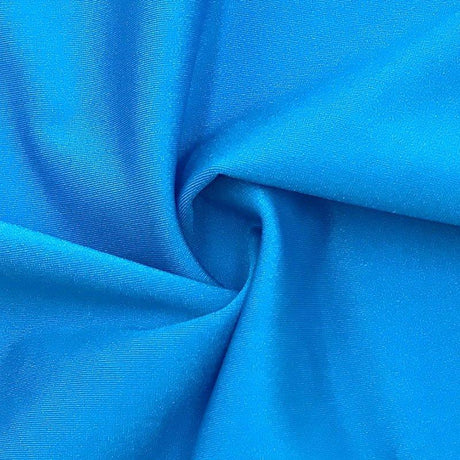
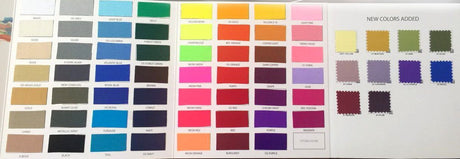
Creating a swimsuit with a gorgeous print requires more than just picking a pretty fabric – it demands careful planning of print placement. Swimwear fabrics are very stretchy and form-fitting, which means a print can distort or end up in unintended spots once the suit is worn. For a broader foundation on swimwear fabric properties before diving in, explore our swimwear fabric guide or browse our full fabric guides hub.
Another big consideration is alignment. A swimsuit often has multiple panels (front, back, cups, etc.), and if you're not mindful, the print won't line up at the seams or along the body's symmetry. Because swimwear is usually worn tight, an unfortunately placed motif can be embarrassing. In short, print placement is critical – it affects both the visual appeal of the swimsuit and the comfort and confidence of the person wearing it.
Educational Overview
What is "print placement" in swimwear design, and why does it matter? In fashion terms, print placement refers to deliberately positioning a print's elements on a garment rather than just using a random section of patterned fabric. In swimwear, this could mean centering a medallion on the front of a one-piece or ensuring a logo lands on the hip of each bikini. Good print placement elevates a design by making it look intentional and flattering.
Key Challenges in Swimwear Print Placement:
Distortion from Stretch: Swim fabrics have significant 4-way stretch and are often sewn with negative ease (smaller than body measurements), so they expand on the body. This can warp prints – a circle might turn into an oval, or a leopard spot might enlarge in a high-stress area. Always test how a fabric's print looks when stretched to body dimensions. Our stretch fabric types page covers how stretch percentage affects how dramatically a print will distort at body scale, and how to anticipate distortion when planning placement.
Panel Alignment and Mismatches: Most swimsuits are made of multiple pattern pieces. Without planning, a continuous print can look disjointed at the seams. Stripes or geometric patterns are notorious for this – if you don't match them across seam lines, the break in pattern is very noticeable.
Unflattering or Awkward Motif Placement: Because swimwear hugs the body, certain motifs can draw unwanted attention if placed incorrectly. A classic rule is avoiding focal motifs on areas like the crotch or directly over nipples. Scrutinize your print for any element that might be misread or awkward on a curvy human form.
Technical Print Behavior by Fabric Type
Not all swimwear fabrics behave the same, especially when it comes to prints. The two most common base materials are nylon (polyamide) blends and polyester blends, both mixed with a portion of spandex (elastane) for stretch. Understanding these differences will help you plan print placement more effectively.
| Fabric Type | Composition (Typical) | Weight (GSM) | Stretch & Recovery | Print & Performance Characteristics |
|---|---|---|---|---|
| Nylon Spandex | ~80–85% Nylon, 15–20% Elastane | ~180–200 GSM | Excellent 4-way stretch (often 50–70% in both directions); very soft hand, "second skin" feel | Absorbs ink/dye well – prints can be vibrant with sharp detail. However, nylon is slightly less chlorine-resistant, so repeated pool use may fade the fabric or print faster. Best for fashion swimwear, boutique designs, or any application where a luxurious feel and vivid print are priorities |
| Polyester Spandex | ~80–85% Polyester, 15–20% Elastane | ~200–220 GSM | Excellent 4-way stretch (often 50–60% horizontal, 30–50% vertical); a bit firmer stretch | Highly chlorine and UV resistant. Prints are typically applied via sublimation which yields permanent, saturated color that won't crack or peel. Ideal for active or competitive swimwear where longevity is key |
| Others (PBT Polyester, etc.) | E.g. 100% PBT Polyester or blends | ~150–170 GSM | 2-way or mechanical stretch; high resilience | Very durable but have less elastic stretch. Use for performance suits where print placement is simpler and longevity trumps aesthetics |
Our nylon-spandex fabric guide covers how nylon-spandex constructions compare to polyester-spandex in stretch, recovery, softness, and chlorine durability across all swimwear applications. Our fabric weight guide provides a full breakdown of how GSM affects opacity, compression, and durability across all common swimwear fabric constructions.
A few technical notes: Nylon vs. Polyester for printing – Nylon tends to take color deeply and vividly, which is why print detail on nylon/spandex can look exceptionally sharp. Polyester holds color through wear and wash like a champion. With sublimation printing on poly, the ink actually becomes part of the fiber, so the print won't fade or crack and can stretch without issue. Our sublimation page covers how sublimation printing bonds dye into polyester-spandex fibers to achieve permanent, saturated color, and our sublimation paper and sublimation transfer paper pages cover the consumables that determine print sharpness and color accuracy.
Stretch variation and print distortion: A print may appear differently on a fabric with higher stretch percentage versus one with a lower stretch. When planning placement, account for how much the fabric will stretch at different points. Always do a stretch test on your fabric and see if the print skews.
Digital Printing & Scale Considerations
Large Motifs vs. Small Repeats: In swimwear, scale is crucial. Because swimsuit pattern pieces are relatively small (think of a bikini triangle or a swimsuit bra cup), overly large motifs can get cut off or barely show. It's often safer to stick to a smaller scale print for swimwear – this way the design is visible in its entirety on each piece.
Digital Printing Precision: Digital textile printing offers a lot of flexibility for swimwear. It can print high-resolution, photo-like designs and doesn't require a repeat pattern – you can print your fabric with engineered placement prints right on it. The placement accuracy is high on the fabric, but you still have to cut the pieces exactly as intended.
Understanding Fabric Roll Variance: Even with sublimation (which prints from paper to fabric), fabrics can shrink a bit during the heat process, and registration can vary. In general, all-over prints (AOP) are printed on continuous yardage and then cut in the most economical way, so the print position will naturally vary piece to piece. If you require that every swimsuit has the exact same part of the print in the center, you are essentially asking for a placement print on each, which is less efficient and more costly.
Choosing Sublimation vs Digital for Placement Needs: Sublimation printing is fantastic for all-over designs on polyester – it's cost-effective at scale and extremely durable. Digital printing can print smaller batches or even individual panels with exact designs, which is great for prototyping or smaller brands. Color vibrancy and fastness can differ: sublimation colors generally won't fade and are very vivid on poly, whereas digital prints on nylon need proper fixation and possibly a protective topcoat for equal durability. Our sublimation page covers how to evaluate fabric suitability for sublimation printing and how to choose between sublimation and digital methods for different project types.
Print Scale & Design Cohesion: Often a medium-scale print (e.g. motifs 2–3 inches in size, repeating) works well for adult swimwear – it's discernible but not overpowering. A well-designed swim print has fairly even color and motif spread, so any two pieces cut from it still look like they belong together.
Print Layout Strategy Before Cutting
Once you have your fabric and print ready, the next crucial step is planning your layout before you cut. This is where you ensure each pattern piece is placed on the fabric in just the right spot.
Key Steps Before Cutting (Checklist):
Work on a single layer of fabric: Always lay your swimwear fabric right side up, in a single layer when positioning pattern pieces for cutting. Don't fold the fabric as you might for solids, because a print's placement can shift or mirror unexpectedly on the underside. Cutting each piece one at a time lets you see exactly what part of the print will show on the garment.
Orient pattern pieces with stretch direction and print in mind: Most swim patterns indicate the direction of greatest stretch (usually horizontal around the body). Make sure to align the grainline or stretch line on your pattern with the fabric's stretch direction every time. Also consider the print's orientation: if the print has an obvious direction (like upright flowers or text), ensure all pieces are placed so the print will be right-side up on the wearer. Our how to sew stretch fabric guide covers stretch direction alignment and layout techniques for all common swimwear construction scenarios.
Position motifs deliberately: Look at each pattern piece and decide what you want centered or featured on it. For example, for a bikini bottom, you might decide to center a cluster of flowers on the back and avoid any single flower dead-center on the crotch panel. Be especially mindful of "risky" motifs – place large, bold elements on parts of the body that can carry them (like the side of the hip, or upper chest) and keep them away from more sensitive areas.
Ensure pairs are mirrored or identical as needed: For any pieces that come in left/right pairs (like bra cups, or left/right half of a front), decide if you want them mirrored (a reflection of each other) or identical in print placement. At minimum, try to have them similar in color and scale so one side doesn't visually outweigh the other.
Match across seams when possible: If your design has a continuous print that you want to flow nicely, take extra time for this. On side seams, decide if it's worth matching – for busy florals it may not matter, but for geometrics or stripes it definitely does.
Use guides or templates: Create a print layout guide by tracing your pattern pieces onto clear plastic or Swedish tracing paper, then drawing in some of the key print motifs on that outline. This way you have a transparent pattern piece with the print pattern on it, which you can lay over your fabric to preview how the cut will look.
Checklist before you cut: Are all pattern pieces present and accounted for? Did you double-check that none are placed upside down relative to the print's intended direction? Are mirrored pieces correctly mirrored? Check that the stretch direction is correct on each piece. Take a step back and look at the overall layout – does it look balanced? If it helps, take a photo of your planned layout.
Choose the right fabric & print for your style: Using a fabric specifically made for swimwear printing (with good stretch and colorfast print) will make your life easier. Our how to choose fabric guide covers what to evaluate when selecting swimwear fabrics, including stretch testing, opacity testing, and hand feel assessment.
How to Choose Print Placement Based on Project Type
Performance/Active Swimwear
For athletic swimsuits (competitive swim team suits, racing one-pieces, surf rashguards, etc.), function comes first. Small-scale, continuous patterns or abstract designs work best – they won't look odd when the fabric is stretched to its limit. Consider using color blocking – a solid color in high-stretch areas (like side panels) and a print in areas that remain relatively stable. Our activewear fabric guide covers fabric selection across all common performance swimwear applications.
Fashion Swimwear (Trendy bikinis, cut-outs, etc.)
In fashion-forward or luxury swimwear, aesthetics take center stage. Here you might deliberately use placement prints for visual impact. Symmetry vs. asymmetry is a design choice: symmetrical placement (mirrored left to right) can give a very polished, classic look, whereas an off-center placement print can be artsy and eye-catching. Fashion swim is where you can get creative, but usually one major placement element per garment is enough, complemented by smaller coordinating patterns or solids elsewhere.
Kids' Swimwear
Designs for kids are fun but come with practical considerations. Kids' swimsuits are small, so prints should generally be small-scale and whimsical. Try to avoid having half a character on a seam. Any print should be colorfast and non-irritating (the inks should be safe) since kids have sensitive skin. Because kids outgrow suits quickly, using very expensive placement printing might not be worth it – save the ultra-precise placements for adult pieces and keep kids' designs simpler and cost-effective.
Activewear vs. Fashion vs. Kids Summary
If it's performance, lean toward subtle prints or all-over patterns that require minimal placement fuss and won't hinder movement or durability. If it's fashion, decide on your statement – a placement print can be the star, just be ready to put in the work to execute it flawlessly. If it's kids, prioritize fun and practicality – smaller, repeating prints that look cute and aligned without needing obsessive precision.
Common Mistakes to Avoid
Ignoring Stretch Direction (Grain) During Layout: A frequent error is to focus so much on the print's look that you forget the technical requirement of placing pattern pieces on the correct grain/stretch orientation. If you cut a piece with the stretch going the wrong way, the swimsuit may not fit or the print may distort oddly when worn. Double-check every pattern piece's alignment before cutting.
"Floating" or Off-Center Main Motifs: If there is a principal element in the print (a big flower, an animal, a logo), don't let it land randomly. Either center it nicely on a panel or ensure it's completely absent from that panel. Half of a motif or one that's just slightly off from center can look like a misprint.
Accidental Emphasis on Body Areas: After you place your pattern pieces, imagine the garment on a person and examine every motif's position. If something makes you even slightly unsure, adjust the placement. Place big motifs in safer zones (like mid-thigh of a swim short, upper chest, upper back) and keep them away from sensitive areas.
Forgetting Print Repeat Alignment: If you're working with an all-over print that has a discernible repeat (like stripes, plaids, or any linear pattern), forgetting to align the print across pieces is a big mistake. Use notches or visual cues on the fabric to align pieces that will be joined.
Not Accounting for Negative Space and Color Balance: Observe the distribution of your print. If your print has large open areas and dense areas, try to capture a similar mix in each major pattern piece. Balance the color and motif spread so one side of the body isn't heavy with print while the other is mostly background.
Skipping the Test Fit/Stretch Check: If you have time, baste together the main pieces of the suit and put it on a dress form or fit model before finalizing. Check that the print is doing what you wanted. A quick fit check can save you from replicating a print placement error across dozens of garments. Our spandex care guide covers why rinsing test garments promptly after fitting sessions in water is important for preserving the integrity of both the fabric and the print.
Neglecting Fabric/Ink Behavior: Always ensure your print method and fabric are compatible and test a swatch. Using sublimation on a nylon fabric may result in faded or washed-out prints because sublimation ink doesn't properly bond to nylon. Know the quirks of each printing method before finalizing your placement.
When to Use Solid or Semi-Printed Alternatives
To Simplify Construction and Reduce Waste: Intricate prints often mean you need extra yardage (to place pieces optimally) and more time aligning everything. Color blocking is a popular swimwear design technique that can replace complex prints – for example, a swimsuit with solid black side panels and a printed front panel achieves visual interest with less print to worry about.
When Print Placement Would Be Too Complex: Some design ideas become a nightmare of engineering if you insist on a print. In such cases, a solid color might actually highlight the style lines better. A textured swim fabric (like a ribbed or embossed solid) can give visual interest without any print at all.
For Cost and Yield Efficiency: Solid fabrics allow you to nest pattern pieces tightly and use nearly all your fabric. If you want to offer many colorways, solids make it easy – you can have the same suit in 5 colors without print logistics.
When the Print Doesn't Improve the Design: Sometimes, less is more. A busy print on a very elaborate swimsuit design might be overkill – the details get lost in the pattern.
Semi-Printed Compromises: Panel prints or border prints can be easier to cut because you know exactly where the print is and you cut your pattern accordingly. A border print could be used at the neckline or hem of a swimsuit cover-up or along the top edge of a bikini.
Sustainability and Ethical Production: Solids and efficient cutting mean less waste. Working with readily available solid fabrics (especially recycled poly or nylon options) can be more eco-friendly than custom printing yards of fabric.
Aesthetics and Trend Cycles: Prints can be very trend-driven, whereas solid colors (or simple color blocks) tend to be more timeless. If you're making a swimsuit that you want to last style-wise, a solid or a classic print (stripes, polka dots) in strategic placement might age better than the print-of-the-year splashed all over.
Conclusion
Print placement in swimwear is both an art and a science. The key takeaways are: plan ahead, test often, and place with purpose. Always start with the end in mind – envision how the swimsuit will look on a body and let that guide where each motif goes. Use the right fabric for the job (nylon vs polyester) and the right printing method for your design requirements.
When you align a print thoughtfully, you're also aligning with the body's movement and the garment's engineering. The result is a swimsuit that not only turns heads on the beach but also fits and feels better for the wearer.
Ready to find the perfect fabric for your printed swimwear project? Use our swimwear fabric guide for curated recommendations across all swimwear applications, our nylon-spandex fabric guide for full performance profiles of nylon-spandex constructions, and our fabric weight guide and stretch fabric types page to evaluate technical specifications. Our sublimation page, sublimation paper page, and sublimation transfer paper page cover the complete printing workflow. Our how to sew stretch fabric guide covers all construction techniques for swimwear. Our spandex care guide and fabric care guide keep every finished suit performing at its best. Have questions? Our expert help and advice page and FAQ are always available. Sign up for SpandexByYard Rewards to earn points on every purchase – happy swimwear designing, may your prints be ever in the right place!