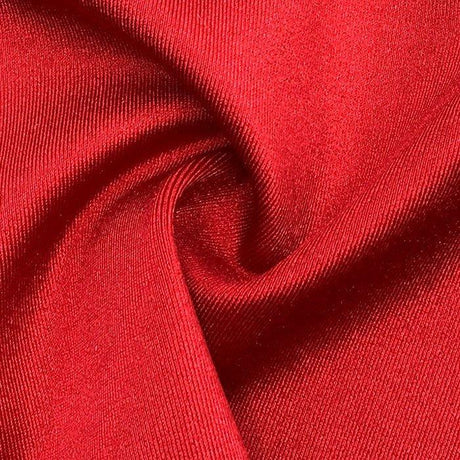
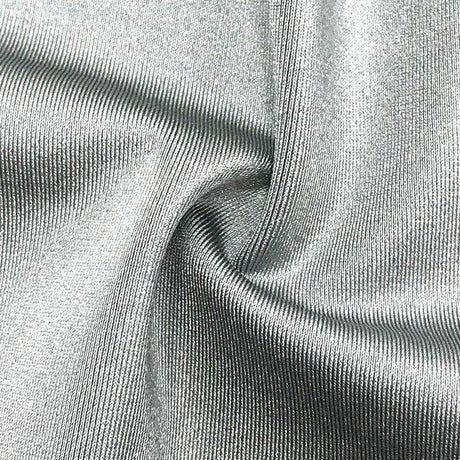
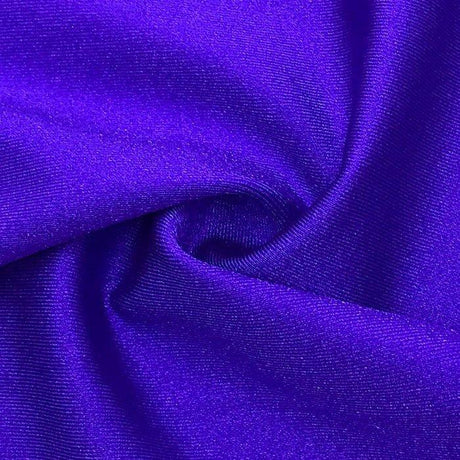
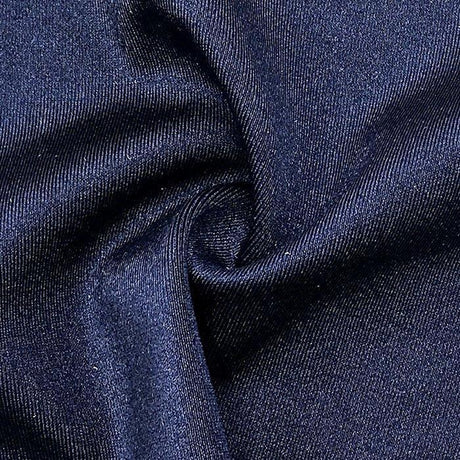
Many costumers struggle to find a printed stretch fabric that balances stretch recovery (keeps shape), colorfastness (resists fading), and durability for active movement. Performance costumes (for dance, athletic wear) demand materials that can endure repetitive motion and frequent washing without losing elasticity or vibrancy. For a broader foundation on stretch fabric properties before diving in, explore our stretch fabric types page or browse our full fabric guides hub.
Understanding Printed Stretch Fabric Types
Polyester/Spandex (Poly Lycra)
A top choice for vibrant printed designs – polyester fibers allow sublimation prints with rich, permanent color. Prints on poly-spandex are vivid and tend to be very colorfast. Generally thinner and lighter than nylon spandex, with a smooth finish ideal for leggings and activewear. Often has a white base (print is applied on one side), which can show through as the fabric stretches. Excels at moisture-wicking and quick-drying. Our sublimation page covers how sublimation printing bonds dye into polyester-spandex fibers to achieve permanent, saturated color that moves with the fabric.
Use Case: Brightly printed activewear, dance costumes, and superhero suits. Best for pieces needing high stretch and vivid prints, but consider lining or heavier weight for areas needing more coverage.
Nylon/Spandex (Nylon Lycra)
Known for strength, flexibility, and a soft yet slightly silkier feel. Nylon is very abrasion-resistant and strong, so nylon-spandex fabrics stand up well to wear and tear. Takes dye well for deep, saturated colors. Generally thicker and with higher opacity than poly-spandex. Available in finishes from high-shine to matte, giving versatile looks (think glossy gymnastics leotards vs. matte dance unitards). Offers excellent 4-way stretch and recovery – the fabric moves with the body and snaps back without bagging. A common quality blend is ~80% nylon, 20% spandex. Our nylon-spandex fabric guide covers how nylon-spandex constructions achieve this combination of smooth hand feel, strength, and 4-way stretch.
Use Case: Dancewear, swim costumes, and high-performance outfits. Ideal when you need durable stretch fabric that can handle intense movement and look polished.
Cotton/Spandex (Cotton Lycra)
A natural fiber blend offering comfort and breathability, typically ~90–95% cotton with 5–10% spandex for stretch. Feels soft and is gentle on skin, which is great for long wear. Cons: lower elastic recovery and not suited to heavy strain. Cotton fibers don't recover as well as synthetics, so garments can bag out more quickly, especially if they get wet. Also, cotton is less colorfast; prints and dyes may fade faster with washing and sunlight. Our cotton-spandex fabric guide covers how cotton-spandex blends compare in stretch behavior and recovery relative to synthetic alternatives.
Use Case: Children's costumes, t-shirts or leggings for casual cosplay, and any outfit prioritizing comfort. Not recommended for intense athletic costumes.
Other Stretch Knit Options
Modal or Bamboo Spandex: Rayon-derived fibers blended with spandex create ultra-soft, drapey knits. These have 4-way stretch and a "buttery" soft hand, perfect for comfort-focused costumes or loungewear-style outfits. They breathe well and feel cool, but often have lower recovery than nylon/poly blends.
Supplex Nylon: A specialized nylon variant engineered for a cotton-like softness. Supplex nylon/spandex fabrics offer the durability and stretch of nylon with a matte, soft touch. Often used in high-end leggings or yoga wear.
PBT (Stretch Polyester): PBT is a type of polyester with inherent stretch and exceptional chlorine resistance. Largely chlorine-proof, it's used in competitive swimwear and swim costumes (mermaid tails, aquatic-themed outfits). Our swimwear fabric guide covers PBT's role in performance swimwear and how it compares to spandex-based fabrics for different aquatic applications.
Stretch Velvet & Other Specialty Knits: Stretch velvet (often polyester/spandex) can be printed or solid and offers a unique plush look for circus, cosplay or dance costumes. Our dancewear fabric guide covers specialty knit options across all common dancewear and performance costume applications.
Technical Specifications That Matter
Fabric Weight (GSM): The weight (in grams per square meter) influences thickness and opacity. Higher GSM fabrics are thicker, often more durable and less see-through. For example, a 250 GSM spandex will likely be more opaque (and supportive) than a 150 GSM spandex. If a printed fabric is too lightweight, it may turn transparent when stretched. Our fabric weight guide provides a full breakdown of how GSM affects opacity, compression, and durability across all common spandex-blend constructions.
Stretch Percentage & Direction: How far the fabric can stretch and whether it stretches in two directions or four. 4-way stretch is crucial for form-fitting costumes that need flexibility in every direction (e.g., unitards, bodysuits). Athletic and dance costumes often require at least 50–70% stretch in both directions. Our stretch fabric types page covers the full technical difference between 2-way and 4-way stretch constructions and how to verify true multidirectional stretch when evaluating fabric samples.
Stretch Recovery: How well the fabric returns to its original size after stretching. Fabrics with higher spandex content (or high-quality elastane like Lycra®) generally have better recovery. Our stretch fabric types page covers how to measure and compare recovery ratings when evaluating stretch fabric samples.
Colorfastness: The ability of the print/dye to resist fading or running. Polyester/spandex blends printed via sublimation have superb colorfastness because the dye chemically bonds to the fiber. Check if the fabric is labeled with any colorfastness standards (e.g., "chlorine-resistant", "UV-protective"). Our sublimation paper and sublimation transfer paper pages cover how paper quality affects ink release and long-term color vibrancy in sublimated prints.
Opacity & Base Color: Printed stretch fabrics often start as a white base that's printed on. Evaluate opacity by stretching a swatch over your hand – if you can see your skin or the print lightens significantly, you may need a heavier weight or a lining.
Moisture-Wicking & Breathability: For athletic or dance costumes, you want fabric that handles sweat. Polyester is excellent here – poly-spandex fabrics often wick moisture and dry quickly. Our activewear fabric guide covers moisture-wicking ratings across all common performance fabric constructions.
Durability Factors: Nylon-spandex is highly abrasion-resistant but can be weakened by chlorine over time. Polyester-spandex (especially PBT blends) can be extremely chlorine and salt resistant. If your costume will experience rubbing, choose a fabric known for durability (nylon or PBT blends).
Composition: The fiber content proportions affect performance. More spandex generally means more stretch and recovery, but also potentially more susceptibility to heat/chemicals (since spandex is the part that degrades first).
How to Choose the Right Fabric for Your Project
Identify Your Project's Demands: Start by asking, "Will this costume be used for intensive activity or mostly for looks?" The answer guides you toward performance fabrics or comfort fabrics.
Dancewear & Gymnastics Costumes: These outfits endure extreme movement, sweat, and frequent washing. Key needs: maximum 4-way stretch, excellent recovery, and moisture management. Opt for quality nylon/spandex or high-end polyester/spandex known for athletic use. Prints should be colorfast (won't bleed onto skin with sweat) and fabric should have a firm stretch so it hugs the body securely. Ensure sufficient GSM to prevent transparency under stage lights. Our dancewear fabric guide covers fabric selection across all common dancewear and performance costume applications.
Cosplay & Costume Play: For a Spider-Man or superhero suit with intricate printed patterns, you'll likely use a dye-sublimated poly/spandex zentai fabric – these offer great detail. Check that the fabric has the needed stretch to be skin-tight and that the print won't crack when stretched (most dye-sub prints won't). For less demanding costumes, cotton-spandex or other blends can work.
Athleticwear & Active Costumes: Choose fabrics labeled for sports or activewear with properties like UV protection, compression, and sweat-wicking. Polyester/spandex blends with CoolMax or similar tech are common. Our activewear fabric guide covers fabric selection across all common activewear and active costume applications.
Children's Costumes: For children, a soft cotton/spandex knit or a poly/spandex with a brushed finish can be ideal. Fabrics should be easy-care (machine washable, able to handle spills). Stretch is important because kids move a lot; a 4-way stretch will allow them to play comfortably.
Checklist – Factors to Consider:
- Required Stretch & Recovery: Does the fabric stretch enough for the design (and in the right directions)? Will it spring back without losing shape?
- Weight & Opacity: Is it heavy enough to not be see-through? Would a lining be required?
- Print Quality: Is the pattern crisp and on-grain? Check that stretching the fabric doesn't drastically distort or fade the print
- Durability Needs: Will this costume see rough use? Choose higher durability fabrics accordingly (nylon or specialty sports fabric)
- Comfort & Inner Feel: Is the fabric comfortable against the skin?
- Care Requirements: Can it be washed easily? Make sure care aligns with how often it will need cleaning
- Budget: Higher quality performance fabric can cost more – decide if the project justifies it
Common Mistakes to Avoid When Working with Printed Spandex
Using the Wrong Needle Type: A regular sharp (universal) needle can wreak havoc on knits. Use a ballpoint or stretch needle every time you sew spandex. These have rounded tips that slide between yarns instead of piercing them, resulting in cleaner stitches. Our how to sew stretch fabric guide covers complete needle selection, stitch type, machine settings, and edge finishing guidance for all common spandex-blend construction scenarios.
"Manhandling" the Fabric (Pulling While Sewing): Stretching the fabric as you sew leads to wavy, rippled seams and misshapen pieces. Let the machine feed the material – do not push or pull. Using a walking foot or adjusting presser foot pressure can also help the fabric feed evenly without stretching.
Using a Straight Stitch on Stretch Fabric: A straight stitch has no give – the first time the costume stretches, those stitches can pop open. Always use a stretch stitch (lightning stitch) or a narrow zigzag for construction seams. For hems, a twin needle can create a professional looking finish that still stretches.
Not Stabilizing Where Needed: Use clear elastic or knit stay tape in shoulder seams, necklines, waist seams, etc., to give them strength. This keeps the shape while still allowing stretch.
Improper Fabric Care: Always wash in cold water on a gentle cycle (or hand wash). Use mild detergent and avoid bleach or fabric softener, which can break down elastane and strip color. When drying, air-dry flat if possible. Our spandex care guide and fabric care guide cover complete laundering protocols for all common spandex-blend garment types.
Neglecting Test Swatches: Always sew a few test seams on leftover fabric to dial in your machine settings. Also test a bit of stretching on a printed scrap – see if the print cracks or if the fabric gets wavy, and adjust techniques accordingly.
When to Use Softer Stretch Alternatives
For Casual or Low-Impact Wear: If the outfit is more for casual wear, lounging, or light activity, you might choose fabrics like cotton-spandex, modal-spandex, or other blends that prioritize comfort. These materials have a gentler stretch, feel pleasant on the skin, and often have a more natural drape.
When Breathability Trumps Support: Modal blends are praised for feeling cool and breathable. A modal/spandex printed knit could be ideal for a close-fitting but soft costume that one might wear all day.
Examples of Softer Alternatives:
- Stretch Cotton Jersey: Great for t-shirts, tunics, and leggings where comfort is key. Easy to sew and breathable. Use it for kids' costumes or casual cosplay pieces where sweating and extreme movement aren't big concerns
- Bamboo or Modal Spandex: Ideal for body-hugging costumes meant for long wear. They have a silky soft touch and are often hypoallergenic
- Stretch Lace or Mesh (lined with something soft): For costumes that need a delicate look, stretch lace provides the look while a soft lining provides comfort on skin
- Knitted Stretch Fleece or French Terry: For a costume that doubles as winter wear or loungewear, these give warmth, a cozy feel, and some stretch
Keep Function in Mind: Even if you go with these alternatives, remember to incorporate enough stretch where it counts. Softer stretch fabrics shine in comfort and style, but they have limits in performance – use them when the costume doesn't need to endure high strain or when the wearer's comfort is the top priority.
Conclusion
Choosing the best printed stretch fabric for a costume comes down to balancing the look you want with the performance you need. Different projects call for different fabric characteristics – there's no one-size-fits-all "best" fabric, but rather the best fit for your specific use.
Remember the key performance features: adequate 4-way stretch so the wearer can move freely, good recovery so the costume keeps its shape, appropriate weight for opacity and support, and strong colorfastness so your prints stay striking.
Ready to find the right fabric for your costume project? Use our stretch fabric types page and fabric weight guide to evaluate technical specifications, our nylon-spandex fabric guide and cotton-spandex fabric guide for curated fiber-type recommendations, and our dancewear fabric guide and activewear fabric guide for end-use specific guidance. Our sublimation page and sublimation paper pages cover the complete printing workflow for polyester-spandex costume fabrics. Our how to sew stretch fabric guide covers all construction techniques, and our spandex care guide and fabric care guide keep every finished costume performing at its best. Have questions? Our expert help and advice page and FAQ are always available. Sign up for SpandexByYard Rewards to earn points on every purchase – with the right fabric, your costume will dazzle in appearance and function flawlessly under the spotlight.