Physical activity can be challenging enough without the added discomfort of inadequate breast support. For active women, a proper sports bra is not just about comfort—it’s an essential piece of equipment for health and performance. This article explores the science and design of sports bras, explaining how they protect your anatomy and enhance athletic performance. We’ll delve into the anatomy of breast movement, health risks of poor support, how sports bras minimize motion (compression vs. encapsulation), the high-tech fabrics behind their functionality, performance benefits of proper support, differences from everyday bras, and guidelines for selecting the right sports bra for every activity. The tone here is technical and evidence-based, providing information useful to fitness professionals, athletes, apparel designers, and health-conscious consumers alike.
The Anatomy of Breast Movement in Exercise
During exercise, the female breast moves in complex ways that can strain its internal support structures. Unlike most body parts, breasts have no muscle tissue of their own – they consist primarily of glandular and fatty tissue, attached to the chest only by skin and thin Cooper’s ligaments. These ligaments (connective tissue bands) are not very strong and do not actively stabilize the breast; all natural support essentially comes from the skin and these ligaments. When a woman runs or jumps, her breasts can move not just up and down but also side-to-side and forward-back, tracing a figure-8 motion through space. In fact, a biomechanical study found that an unsupported breast (in a 32D size participant) can bounce on the order of 15 cm (6 inches) during exercise. This extensive movement in multiple planes puts considerable strain on the skin and Cooper’s ligaments in all directions.
Without proper support, this motion can lead to immediate discomfort and cumulative damage. The repetitive stretching of Cooper’s ligaments – which can elongate by up to ~2 cm during high-intensity activities – may cause micro-tears or laxity in these tissues. Once overstretched, the ligaments and skin do not fully recover their original tautness. Over time, this can contribute to breast sagging (ptosis) as the breast’s internal supports become looser and the skin loses elasticity. In the short term, excessive movement translates to breast pain (exercise-induced breast discomfort is common, especially in higher-impact sports) and even pain in the chest wall, shoulders, or back for some individuals. Thus, understanding breast biomechanics under exercise stresses underscores why external support – in the form of a well-engineered sports bra – is so crucial.
Health Implications of Inadequate Breast Support
Exercising without adequate breast support is not just a matter of momentary discomfort; it can have both short-term and long-term health implications. Immediately, excessive breast motion often results in breast pain and soreness. Medical surveys have found that a majority of active women experience exercise-related breast pain: for example, in a survey of female athletes, 51% reported breast pain, and 29% said that wearing a poorly fitting bra negatively affected their athletic performance. Pain can arise from the stretching of the breast’s connective tissues and the strain on the Cooper’s ligaments and skin, which contain nerve endings. This discomfort can limit one’s willingness to exercise or force modifications to activity.
Over the long term, inadequate support may lead to irreversible stretching of the breast’s supportive structures. Repetitive bouncing allows the weight of the breast to stretch the skin and ligaments, which can result in a loss of breast lift over time (contributing to sagging). While genetics, age, and other factors largely determine natural sagging, high-impact movements without support can accelerate tissue strain. Researchers note that vigorous motion can cause permanent elongation of Cooper’s ligaments and put strain on surrounding skin, potentially leading to irreversible breast ptosis (sagging) if not checked. Supporting the breasts during activity helps prevent this excessive stretch: as one sports science guide states, keeping breasts from swinging freely prevents the ligaments and skin from stretching, thereby reducing future sagging and discomfort.
Insufficient support can also have secondary effects on posture and musculoskeletal health. Large, heavy breasts moving freely can pull on the chest and shoulders, sometimes causing women to hunch or alter their posture to compensate. Over time this may contribute to back and shoulder pain. In fact, some surveys link lack of bra support during running with increased incidence of back pain in women, and suggest that a well-fitted sports bra with strong back panels can help stabilize the spine and improve posture during exercise. In summary, ignoring proper breast support is not merely a cosmetic issue – it’s a health concern. Pain, ligament damage, potential postural issues, and even psychological fallout (avoiding exercise due to embarrassment or discomfort) can result from exercising in an unsupportive bra or no bra at all.
How Sports Bras Reduce Movement: Compression and Encapsulation

Sports bras come in various designs, from compression styles that hold the breasts tightly against the chest, to encapsulation styles that surround and support each breast with separate cups, and hybrid combinations of both. These design strategies are engineered to counteract the multi-directional movement of breasts during activity. Sports bras typically feature wider straps, sturdier bands, and high coverage to help distribute forces and control bounce effectively.
Sports bra design focuses on reducing breast displacement during motion. Broadly, sports bras achieve support in two ways: compression and encapsulation. Compression bras work by pressing the breast tissue against the chest wall to minimize movement. They often have a crop-top style with a single stretchy panel across both breasts, creating a flatter profile. Compression is effective for smaller cup sizes and low to medium impact activities, as it limits overall range of motion by holding the bust firmly in place. In contrast, encapsulation bras have two defined cups (with molded shapes or seaming) that support each breast individually. Encapsulation bras function more like a standard bra but with more robust materials and structure; they don’t mash the breasts together, but rather cradle each one, which can dramatically cut down motion especially for larger breasts. Many high-impact sports bras are hybrids, combining encapsulation with compression (for example, an encapsulated cup design with an overlaying compression panel) to achieve maximum stabilization.
Research in biomechanical labs has quantified the effectiveness of these designs. A well-constructed sports bra can reduce breast movement by a significant amount – studies from the University of Portsmouth’s breast health research group indicate that a good sports bra may cut breast motion by up to 50–74% during high-intensity activities compared to going braless. This is a dramatic reduction in the strain placed on breast tissues. Encapsulation styles in particular tend to outperform plain compression for larger-busted women, because separating and supporting each breast prevents the independent movement that a compression-only bra might not fully control. The high neckline and full-coverage cups of sports bras are deliberately designed to contain tissue that might otherwise move freely; in fact, for every extra centimeter of coverage in the neckline, bounce can be reduced by about 1%, according to findings on high-support bra designs. Wide, non-stretch (or limited stretch) shoulder straps and a snug, broad chest band further anchor the bra, distributing forces across the shoulders and torso rather than focusing them on delicate breast tissue. By combining strategic structural features with suitable materials, sports bras act as an external support system for the breasts, compensating for the lack of internal support.
Advanced Fabric Technologies in Sports Bras
Modern sports bras benefit not only from clever engineering design but also from advanced textile technologies. The choice of fabric is crucial to providing support, comfort, and moisture management. High-performance sports bras predominantly use synthetic fabrics like nylon or polyester blended with elastane (spandex) for stretch. These textiles are engineered to be moisture-wicking, meaning they transport sweat away from the skin to the outer surface of the fabric, where it can evaporate quickly. Keeping the skin dry is important to prevent chafing and rashes during exercise. (Excess sweat combined with friction from a bra can irritate the skin, so moisture-control is a health benefit.) Many sports bras advertise “dry” or “cool” technology – in practical terms this usually refers to polyester or nylon knit fabrics that draw moisture off the skin. For example, Under Armour’s guide recommends looking for bras made of moisture-wicking materials to keep the skin around the breasts dry, thereby preventing the rubbing and chafing that sweat could cause. The fabrics also tend to be breathable, allowing air flow. Often mesh panels are incorporated in sweat-prone areas (like the center of the back or between the breasts) to vent heat and moisture.
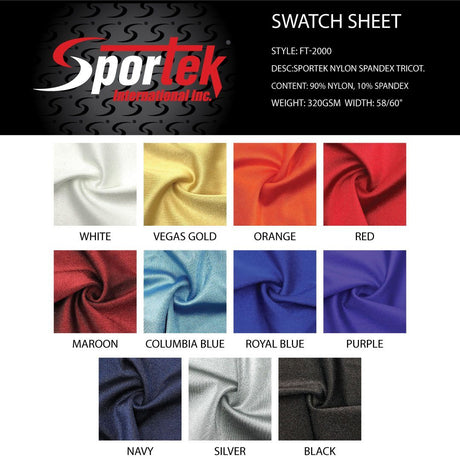
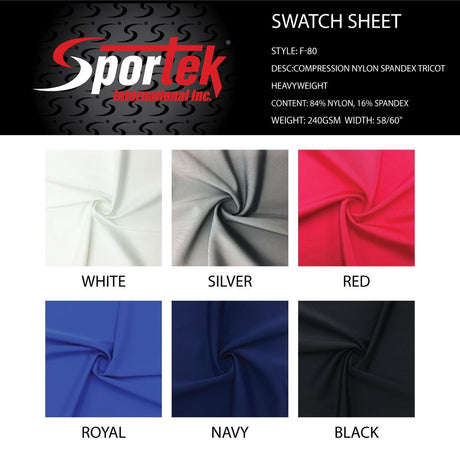
Stretch and support have to be balanced in sports bra materials. Spandex (elastane) fibers are critical because they provide 4-way stretch and recovery, ensuring the bra can move with the body but still return to its original shape. However, a fabric that is too stretchy without strength will not hold the bust firmly. That’s why sports bra fabrics are usually blends, e.g. 80% nylon / 20% spandex, marrying nylon’s strength with spandex’s elasticity. Nylon is a popular base fiber for its durability and resistance to deformation; it helps the bra retain its shape even after repeated use. High-quality bras also utilize specialized knit constructions. Many use warp-knit fabrics (a knitting technique producing very stable but elastic materials) for the bra body, which gives controlled stretch: it stretches enough to be comfortable, but not so much that support is lost. The result is a fabric that provides gentle compression without excessive give, functioning almost like a muscular sling to hold the breasts close to the chest.

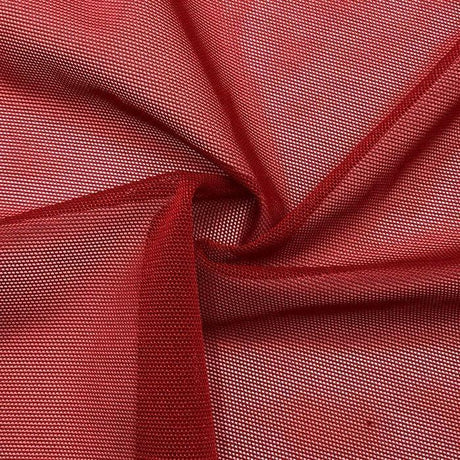
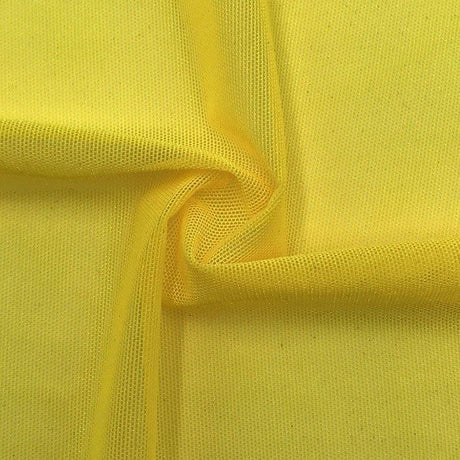
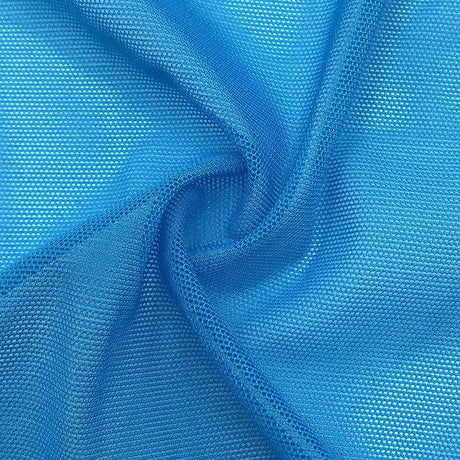
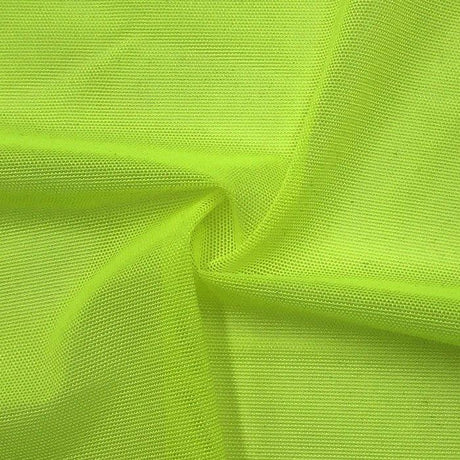
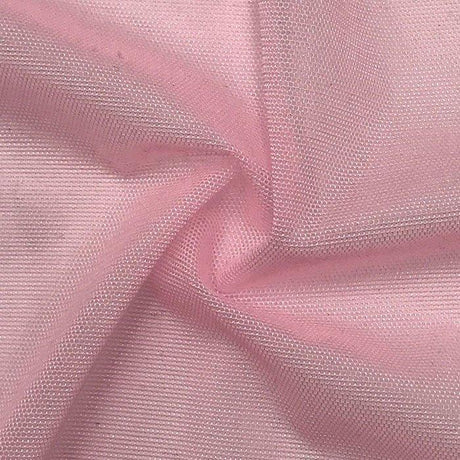
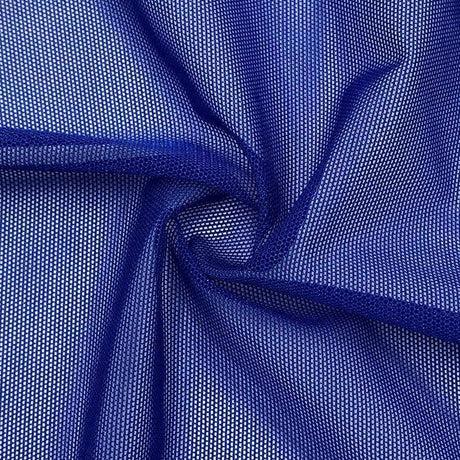
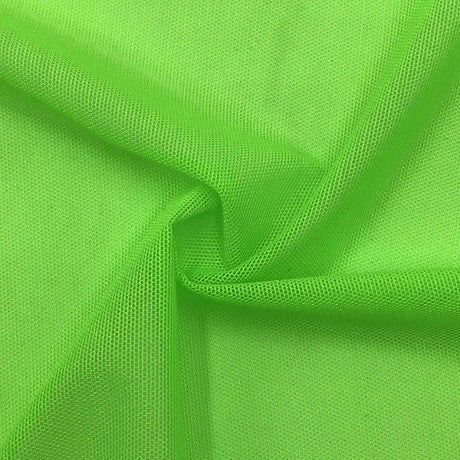
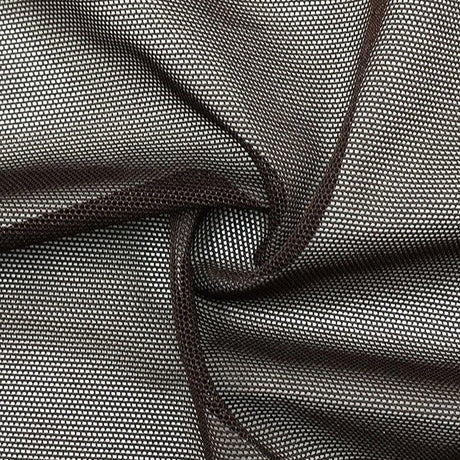
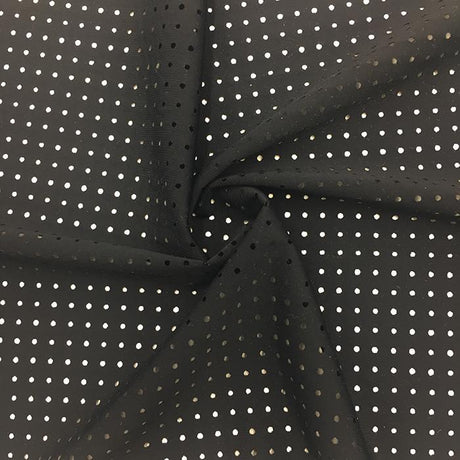
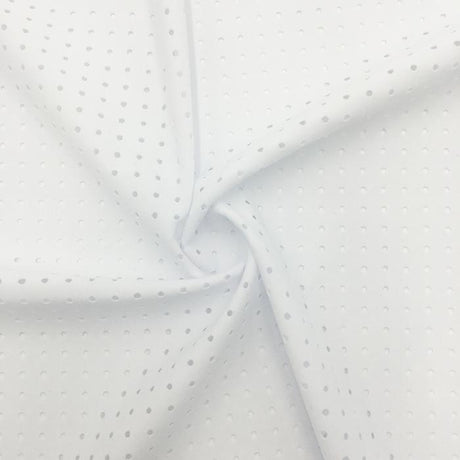
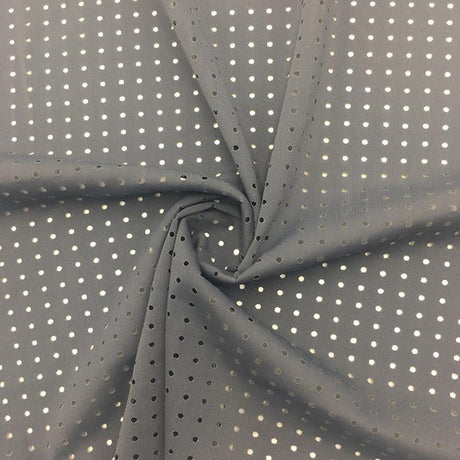
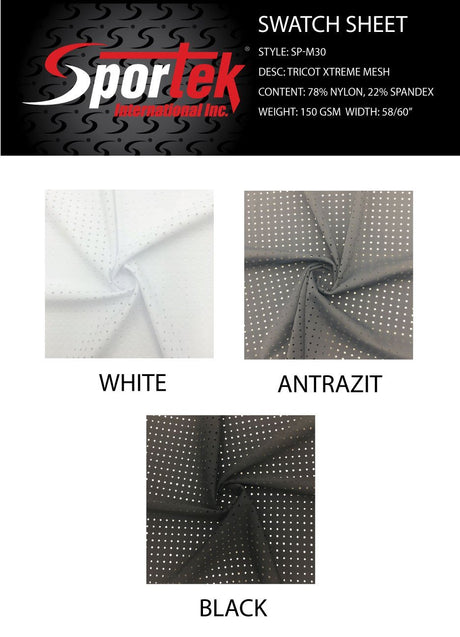
Modern sports apparel uses various mesh fabrics to enhance support and breathability. The infographic above contrasts different mesh types. Power mesh is a medium-weight stretch mesh (often nylon/Spandex) that offers both flexibility and support, making it ideal for sports bra linings, backs, or side panels that add extra hold without bulk. A sturdier variant, power net, is a heavier, high-compression mesh used where firm support is needed – for example, in high-impact bra bands or frame components – to stabilize the bust. In contrast, lighter stretch mesh (sometimes just called athletic mesh) has larger openings and is used for ventilation panels or decorative areas, providing breathability with minimal support. Designers choose the appropriate mesh type to balance support vs. airflow in different parts of a sports bra.
In many sports bras, a power mesh lining is used on the inner layer or in key zones (such as an underband lining or racerback panel) to add strength. Power mesh is a tightly knit, high-compression mesh that still stretches, often rated by its grams per square meter (GSM) to indicate strength. It can significantly increase support when layered inside a bra, without making the bra feel heavy or bulky. For instance, a high-impact bra might hide power mesh within the side panels or across the entire front to reinforce the outer fabric while still allowing airflow. Powernet (essentially a heavier-duty mesh) is used in some extreme support bras or plus-size sports bras to provide extra reinforcement; it has less stretch and more holding power, suitable for locking down bounce in high-strain areas like the band that encircles the ribs. Beyond meshes, sports bra fabrics may also incorporate anti-microbial treatments to curb odor from sweat, and soft brushed textures on interior surfaces to reduce friction. Every component, from the main fabric to the strap lining, is chosen to maximize either support, comfort, or both. In summary, the fabric technology in sports bras is all about managing sweat, maintaining elasticity and strength over time, and providing structure in tandem with the bra’s design. It’s a fusion of material science and biomechanics that sets sports bras apart from ordinary lingerie.
Impact of Proper Support on Sports Performance
Wearing a well-fitted sports bra doesn’t just protect the anatomy of the breast – it can measurably improve athletic performance. When the breasts are unsupported, the body naturally compensates in ways that can hinder movement efficiency. For example, researchers have observed that female runners alter their gait in low-support conditions: they tend to take shorter strides and adopt less efficient running techniques when running without adequate bra support. This likely happens unconsciously as a way to reduce painful bouncing. Over the length of a run or game, these suboptimal mechanics can add up, meaning the athlete isn’t moving as freely or efficiently as she could. Laboratory studies confirm that excessive breast motion affects biomechanics and physiology. In low-support conditions, women showed changes in their breathing patterns – one study found that women breathed less frequently (perhaps due to discomfort or restricted chest movement) when running in an inadequate bra. Upper body muscles also had to work harder to counteract breast bounce, leading to quicker onset of fatigue. Essentially, energy that should go into running or jumping is partly diverted to stabilizing the chest. Furthermore, ground reaction forces (the impact of each footfall) were reported to increase when breast support was poor. Heavier landings not only indicate inefficient form but can raise the risk of injuries in the legs or feet. By contrast, a supportive sports bra mitigates these issues – it holds the mass of the breasts close to the chest, so the runner’s center of gravity is more stable. This enables a more natural stride and arm swing, and the athlete doesn’t need to tense up her upper body to control motion.
The performance benefits extend beyond just biomechanics into focus and endurance. Discomfort is distracting: if a bra is digging into your shoulders or if you feel pain from bouncing, it’s hard to concentrate fully on the game or workout. A good sports bra eliminates those distractions. Athletes often report improved confidence and concentration when they find a bra that fits correctly. There’s no need to pause to readjust slipping straps or endure an underwire poking mid-exercise. This mental comfort can translate to better performance, as the athlete can channel all attention to the task at hand. Moreover, at an elite level, even marginal gains count: a survey of Olympic-level sportswomen found that after a personalized sports bra fitting intervention, 17% of athletes said their performance improved significantly as a result of the better support. Even among non-elite exercisers, the psychological benefit of proper support is well documented. One study of school-age girls discovered that about half of the girls might avoid sports or physical activity due to embarrassment or pain related to their developing breasts. This is a concerning figure, but it underscores how vital a good sports bra can be in encouraging participation. When equipped with a supportive bra, women and girls feel more confident to engage in vigorous activities without fear of pain or unwanted attention. Indeed, adequate support has been shown to reduce self-consciousness and improve body confidence during exercise. This boost in confidence and comfort can lead to greater enjoyment of sports, higher persistence, and overall better performance outcomes. In summary, a sports bra is as much a piece of performance gear as shoes or training equipment – it helps an athlete move more efficiently, avoid discomfort-related disruptions, and maintain focus and confidence throughout activity.
Sports Bras vs. Regular Bras: Key Differences
It’s worth highlighting how a sports bra differs fundamentally from a regular everyday bra. The key difference lies in function and construction. A standard bra (the kind worn day-to-day under office or casual attire) is primarily designed for comfort, shape, and appearance under clothing. It offers light support for the breasts in normal activities, but it’s not built to withstand the vigorous motion of exercise. In contrast, a sports bra is engineered first and foremost to minimize breast movement and provide robust support during high-motion activities. This functional goal leads to several design differences:
- Support Level: Sports bras provide significantly more support than regular bras. The materials and structure are chosen to restrict mobility of the bust. In high-impact sports bras, virtually every component (straps, band, cups, back) is geared towards stabilizing the breasts. Regular bras, even firm underwired ones, generally allow more bounce; they are acceptable for everyday tasks or maybe gentle walking, but not for jumping or running. If one attempts a jog in a typical T-shirt bra, the discomfort and motion will quickly reveal that it’s not adequate. By contrast, the best sports bras keep breasts firmly in place during activities like running, aerobics, or sports, greatly reducing discomfort and potential tissue strain. Sports bras are thus the preferred choice for any strenuous or repetitive motion, whereas a regular bra might only suffice for very low-impact movement (if any).
- Structural Design: Sports bras usually have a more robust structure. They feature wider straps (to distribute weight and reduce stress on the shoulders) and a broader underband (the band under the bust is often thicker and stronger to absorb force and anchor the bra). The neckline is higher and cups are fuller-coverage in a sports bra, which helps prevent any spillover and controls motion from the top part of the breast. Many sports bras also incorporate racerback or cross-back designs; these strap configurations further stabilize the bra by pulling from both shoulders, and they won’t slip off the shoulders during activity. In contrast, regular bras may have narrower straps, a lower cut neckline, and more elastic (stretchy) bands, because they prioritize discreet fit under clothing and comfort for all-day wear rather than extreme support. Regular bras also often use features like underwires, pads, and narrower clasps to shape the bust – whereas sports bras may omit hard underwires (to avoid poking and because the compression/encapsulation provides shape without a rigid wire) and instead use soft but strong materials. Supportive cups in sports bras are typically made of technical foam or multiple layers of fabric that can both encapsulate and compress, rather than the single thin layer or decorative lace of a fashion bra. All these differences mean a sports bra feels much more snug and structured when you put it on. As one guide succinctly puts it: a sports bra is “crafted to withstand movement and motion”, keeping your breasts in place during exercise, whereas a regular bra is made for more static wear and might fail to prevent bounce, leading to discomfort or even pain during intense activity.
- Materials: The fabrics used in sports bras diverge from those in regular bras. Sports bras use high-performance materials – typically breathable, moisture-wicking synthetics – to handle sweat and strain. You’ll find a lot of nylon, polyester, and elastane in sports bras, often with mesh panels for ventilation (as discussed in the fabric section). These materials dry quickly and maintain their strength when wet, which is important when you’re sweating through a workout. Everyday bras, on the other hand, might be made of cotton, modal, satin, silk, or lace for aesthetic and comfort reasons. Those fabrics can feel nice for daily wear, but they often absorb moisture and have less stretch recovery. A cotton bra that gets drenched in sweat will stay wet and can cause chafing, whereas a sports bra’s technical fabric will wick that moisture away. Additionally, sports bra fabrics are chosen for durability – they are expected to be washed frequently and take a beating from movement, so they’re generally tougher knits/weaves than the delicate fabrics of lingerie.
In summary, wearing a regular bra to do a sports bra’s job is a recipe for trouble. Regular bras just do not provide the immobilization needed for vigorous exercise – they may lead to excessive bounce, which means pain and potential tissue stress. Sports bras are specialized tools for active support. Conversely, sports bras can certainly be worn in daily life (many women prefer their comfort), but they do have a tighter, more restrictive feel by design. Understanding these differences helps in appreciating why investing in a good sports bra (rather than making do with a normal bra) is important for anyone regularly active.
Guidelines for Selecting the Right Sports Bra
Choosing the correct sports bra is essential to reap the health and performance benefits we’ve discussed. One size or style does not fit all purposes – the right bra depends on your activity, bust size, and personal preferences. Here are some guidelines for selecting an optimal sports bra for various activities and needs:
- Match the Bra to Your Activity (Impact Level): Consider the type of exercise you’ll be doing and choose a sports bra with an appropriate support level. Bras are often categorized as low-impact, medium-impact, or high-impact. Low-impact bras, suitable for activities like yoga, stretching, or walking, offer lighter support and often prioritize comfort and range of motion. Medium-impact bras are designed for activities like cycling, dancing, or moderate gym workouts. High-impact sports bras are engineered for running, aerobics, HIIT training, court sports, and other jarring or jumping motions. If you do a mix of activities, err on the side of higher support for the most rigorous exercise in your regimen. Remember that support requirements also increase with higher intensity and any movement involving running or bouncing. As a rule of thumb, if in doubt, go up one support level (for instance, use a medium- or high-impact bra for a medium-impact activity if you want extra security).
- Account for Your Cup Size and Breast Volume: Your breast size significantly influences what kind of sports bra you’ll need. Women with larger cup sizes (D cup and above) generally benefit from more structured, high-support sports bras even for lower-impact activities. Encapsulation or combination-type bras are often preferable for larger busts, as they offer better lift and individual support for each breast. On the other hand, women with smaller cup sizes (A or B cups) might find compression-style bras sufficient for many activities and might prioritize comfort and freedom of movement. Many brands will indicate which cup range a given bra is best for. If you are on the cusp (e.g., a C or D cup doing moderate exercise), consider sizing up the support level. Bra style names can sometimes be clues: bras labeled “High Support” or “Control” are usually targeting larger busts or high impact. Ultimately, every body is unique – but in general, the larger the breasts, the more robust the bra’s support structure should be for strenuous movement.
- Ensure You’re Wearing the Correct Size: A sports bra can only work optimally if it fits correctly. Surprisingly, studies have found that a huge number of women (estimates range from 70% to nearly 100%) are wearing the wrong bra size. This leads to discomfort and inadequate support. To find your size, measure around your ribcage (just under the breasts) to get your band size, and around the fullest part of your bust to get your bust measurement; the difference gives the cup size. The band should be snug and level around your torso – it’s the primary support structure. You should be able to fit about two fingers under the band comfortably, but no more; it shouldn’t ride up or feel looser at the back. The shoulder straps should be adjusted to a similar two-finger tension: secure but not digging into your shoulders. If the bra has cups, your breasts should be fully enclosed in the cups without overflowing or gapping. Any underwire should lie flat on your ribcage and not poke into breast tissue. If you notice the band slanting upward or the cups wrinkling or your breasts bulging, try a different size. A correctly fitting sports bra will feel tighter than a regular bra (by design), but it shouldn’t restrict your breathing or cause pain. Because sizing can vary between brands, you may need to try a few to get the perfect fit – don’t be surprised if your “sports bra size” is slightly different from your everyday bra size.
- Consider Bra Design Features: Beyond size, look at the bra’s design and how it aligns with your needs. If you do high-impact sports or have a larger bust, encapsulation or hybrid designs (with separate cups and a firm band) may serve you better than simple compression. Check the hardware and seams: for long-distance running or all-day wear, you might prefer bras with seamless interiors or covered seams to minimize chafing. Bras with adjustable bands and straps are helpful because you can customize the fit (and tighten them over time as the elastic relaxes). An adjustable back closure can also make it easier to take off a sweaty bra. Some high-support bras include features like padded straps (to ease shoulder pressure) or even gel inserts in the straps, which can be a relief for larger busts. If you engage in activities with a lot of arm movement (tennis, CrossFit, etc.), racerback or cross-back straps might give you better range of motion. Think about climate too: if you exercise in hot conditions, prioritize bras with mesh panels or extra breathability. For those who dislike the compression feeling, look for encapsulation styles that separate the breasts. Ultimately, the “best” design is one that you forget you’re wearing because it does its job without causing new distractions.
- Do an Activity Test: Before committing to a sports bra, do a quick “jump test” or movement test in the fitting room (or if buying online, as soon as you receive it, before removing tags). Jump up and down, jog in place, swing your arms – mimic the motions of your sport. Observe how your breasts move and how the bra feels. A good sports bra will significantly limit bounce – your breasts should feel secure and controlled. Also pay attention to any discomfort: nothing should pinch, chafe, or slip out of place during movement. If the band rides up when you lift your arms or if the straps slide off your shoulders when you jump, the fit or style may not be right. During the test, you should be able to take deep breaths and move freely without feeling constricted by the bra (supportive but not suffocating). This real-world simulation is crucial; what feels fine when standing still might feel very different in motion. Only by testing can you be confident the bra will perform under workout conditions.
- Replace Sports Bras When Worn-Out: Even the best sports bra doesn’t last forever. The constant stretching and sweat exposure break down elastic fibers (like spandex) over time. As a result, the bra will gradually lose support. A general guideline is to replace a sports bra about every 6–12 months if you wear it and wash it frequently. Signs of wear include the band stretching out (you start fastening on the tightest hook and it’s still not snug, or the band begins to roll up), loss of elasticity in the fabric, frayed stitching, or pads/cups that have become misshapen. If you notice the bra isn’t controlling bounce as well as it used to, it’s likely lost some of its structure. Rotating multiple bras and following care instructions (gentle wash, no high heat drying) can extend their life. But when in doubt, retire an old bra and invest in a new one – it’s an investment in your comfort and health during exercise.
By following these guidelines, you can find a sports bra that not only protects your breast health but also potentially boosts your exercise experience. A well-chosen sports bra lets you focus on your performance and goals instead of worrying about pain or distraction. It should feel like a supportive ally in your workouts: you put it on and then forget about it, because it’s doing its job right. In the end, selecting the right sports bra is about understanding your body’s needs and the demands of your activities, and finding the technical apparel that bridges the two. With the right support, you can train harder, run faster, and move with confidence, knowing your health and comfort are secured.