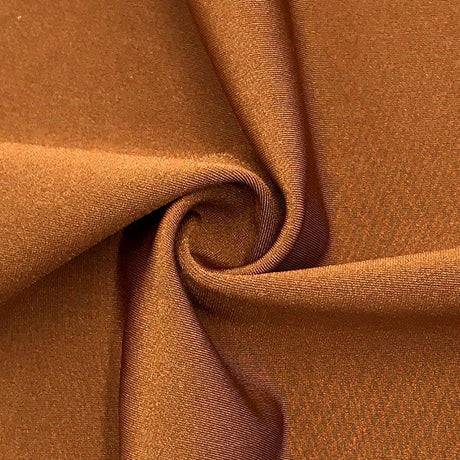
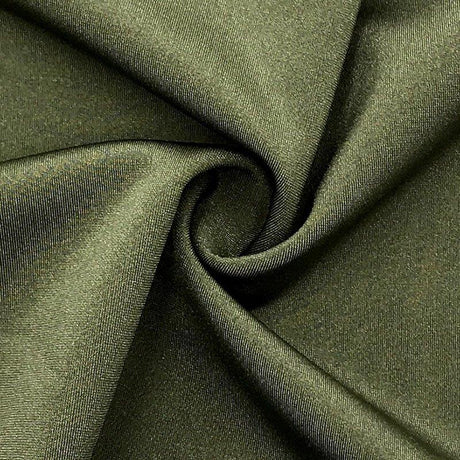
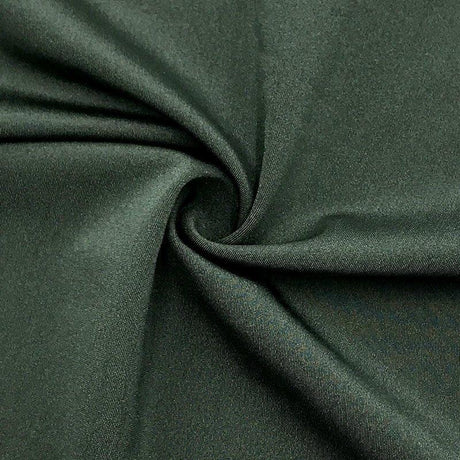
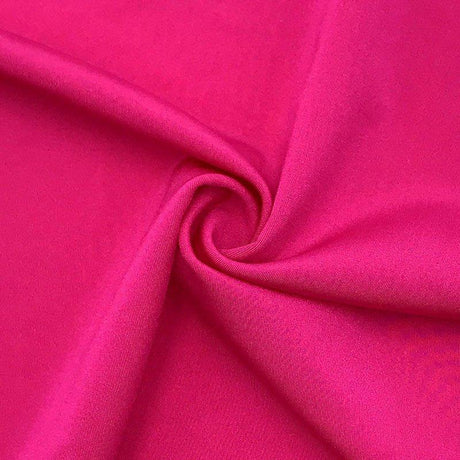
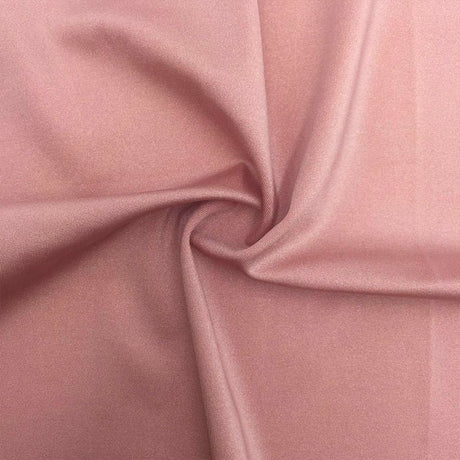
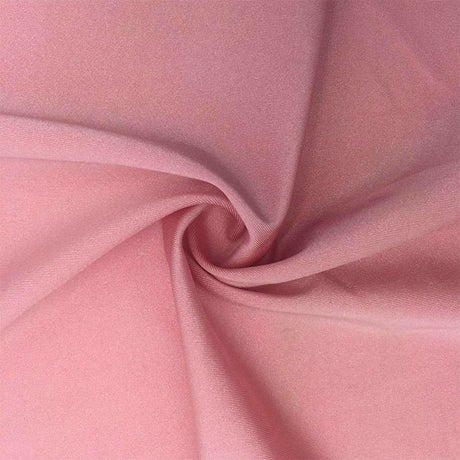
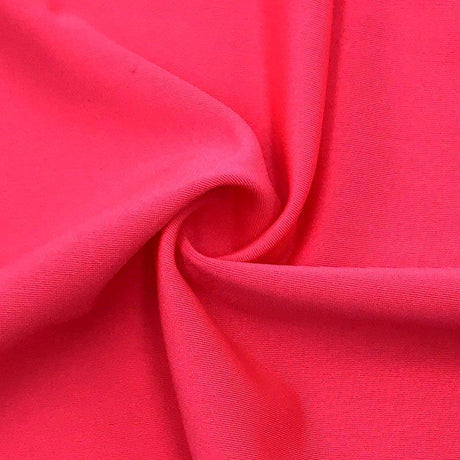
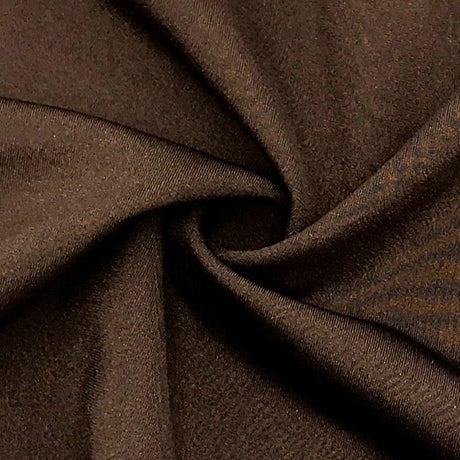
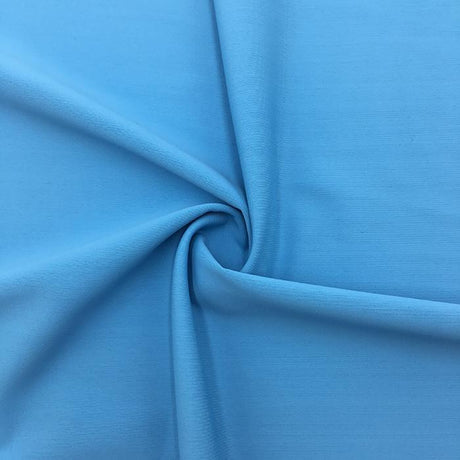
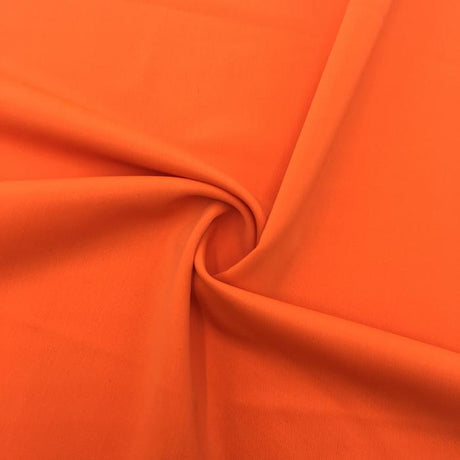
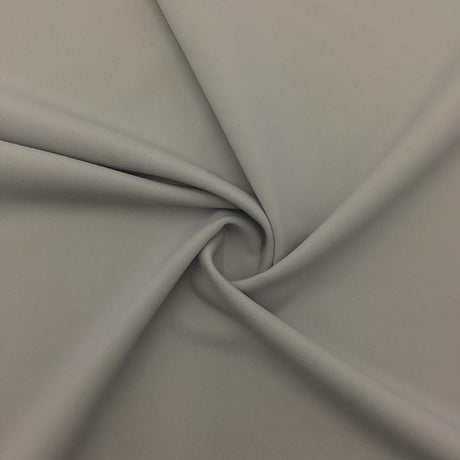
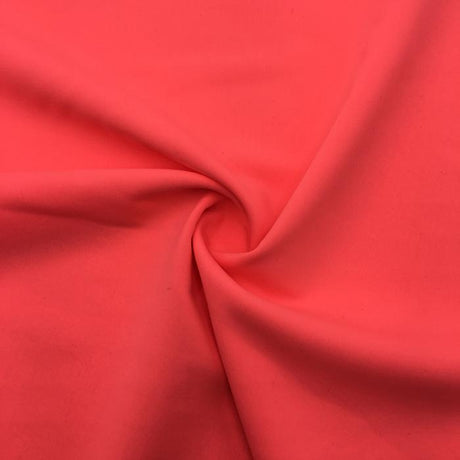
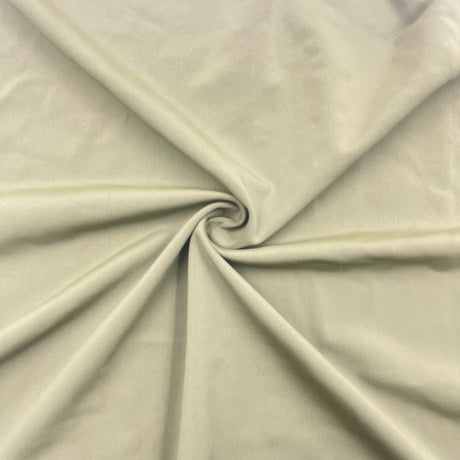
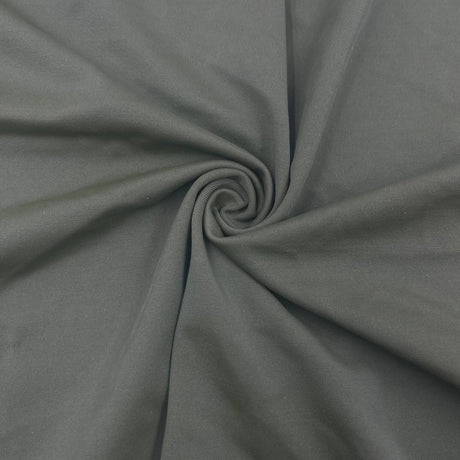
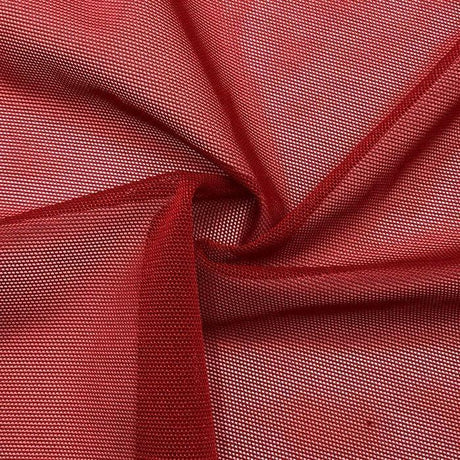
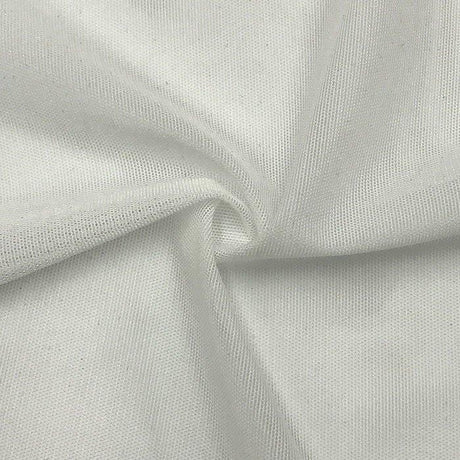
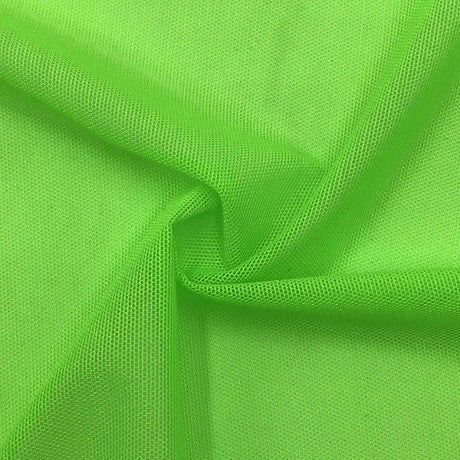
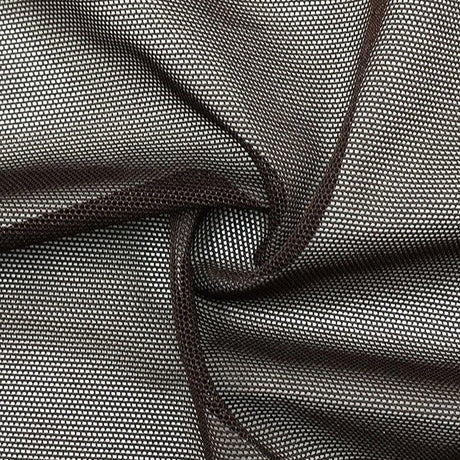
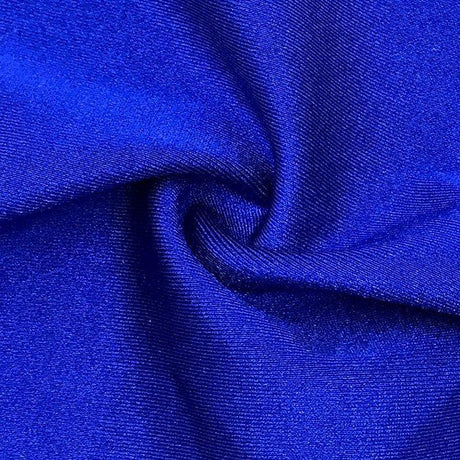
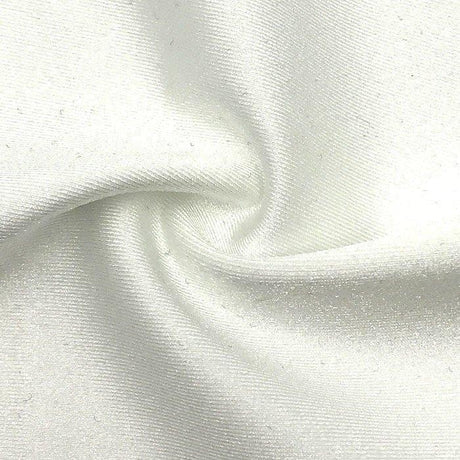
Stretch fabrics have revolutionized clothing by making garments more comfortable and form-fitting. Whether you're sewing your own leggings or shopping for fabric by the yard, knowing the difference between 2-way stretch and 4-way stretch fabric is essential. For a broader foundation on stretch fabric properties before diving in, explore our stretch fabric types page or browse our full fabric guides hub.
What Are Stretch Fabrics?
Stretch fabrics are textiles specifically designed to have elasticity – meaning they can elongate and return to shape. This stretchiness can come from two factors:
Mechanical Stretch: This refers to the natural give of the fabric's construction. For example, knit fabrics are made of interlocking loops of yarn, which inherently allows them to bend and stretch. Even without special fibers, a knit will have some stretch because of its looped structure.
Fiber Content (Added Stretch): Many modern stretch fabrics include elastic fibers like spandex (also known as elastane or the brand name Lycra). These fibers can significantly increase a fabric's stretch beyond its natural knit or weave elasticity. A small percentage of spandex blended with cotton, polyester, or nylon gives the fabric remarkable elasticity and recovery. Our stretch fabric types page covers how spandex percentage translates to real-world stretch percentages and recovery ratings across all common blend types.
Stretch fabrics simplify garment construction (less need for zippers or darts for fit) and increase comfort and lifespan of garments, since they move with you and snap back instead of tearing or bagging.
2-Way vs. 4-Way Stretch: What's the Difference?
When people talk about 2-way versus 4-way stretch, they're describing how many directions the fabric can stretch:
2-Way Stretch Fabric: A 2-way stretch fabric typically stretches in only one direction. Usually this is along the width (selvage to selvage) of the fabric, and not along the length. A common example: many woven stretch denims have spandex only in the crosswise direction, so your jeans might stretch around your hips but not vertically.
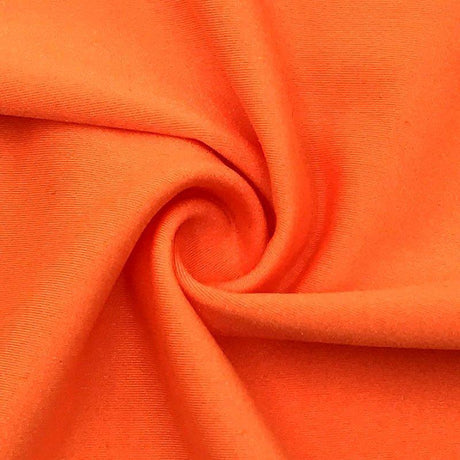
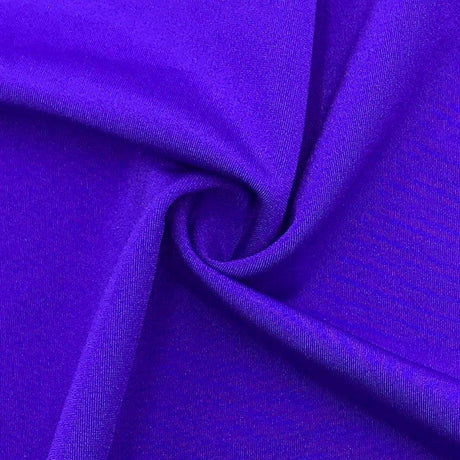
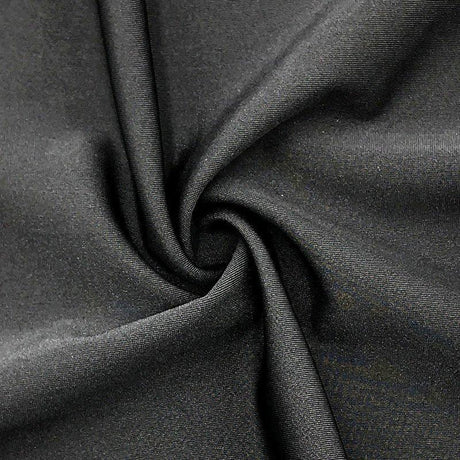
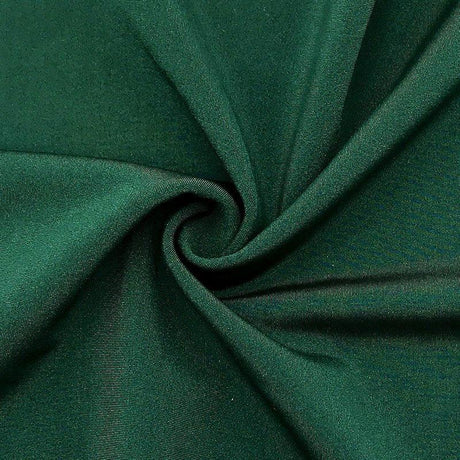
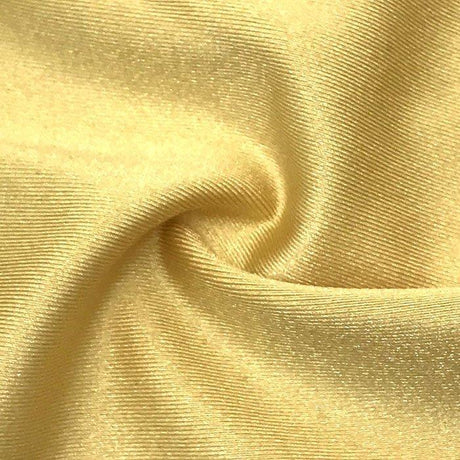
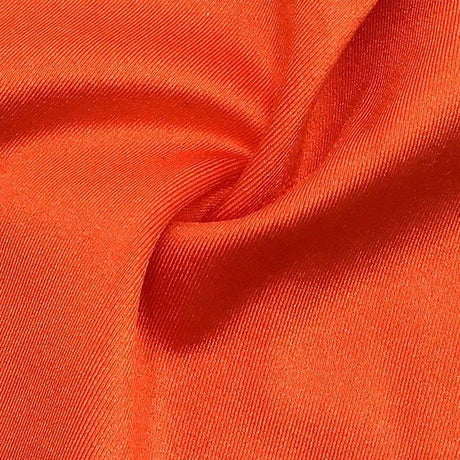
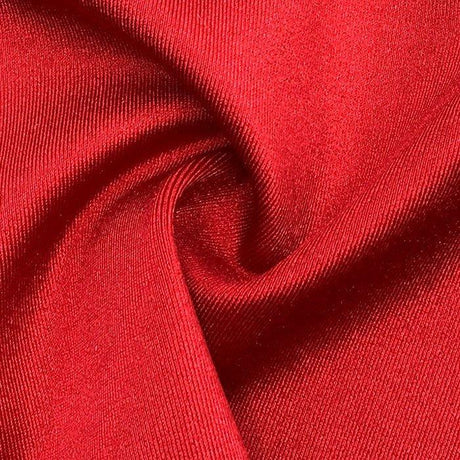
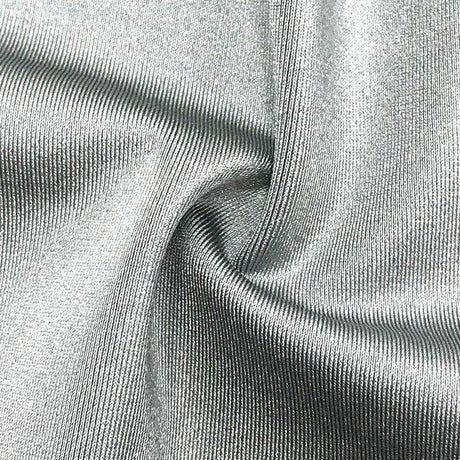
4-Way Stretch Fabric: A 4-way stretch fabric stretches in both directions – horizontally and vertically. It can stretch side-to-side and up-and-down, giving multi-directional elasticity. A classic example is spandex knit (like swimsuit fabric or yoga knit), which can be pulled in any direction and will stretch and recover.
How to tell them apart? Grab a piece of the fabric and tug it in different directions. If it only gives in one direction, it's a 2-way stretch. If it stretches both widthwise and lengthwise with ease, then it's 4-way stretch.
A note on terminology: Be aware that different sources use the terms differently. Most modern fabric retailers use the convention that 2-way = stretches on one axis, and 4-way = stretches on both axes (width and length). When in doubt, rely on the description of which directions the fabric stretches.
How Do Stretch Fabrics Work? (Knits vs. Wovens & Elastane Content)
Knits: Most knit fabrics are naturally stretchy. Knitting involves looping yarns together, which creates an elastic chain structure. Many knit materials become 4-way stretch when a fiber like spandex is added. For example, a cotton jersey with 5% spandex will typically stretch in all directions. Our cotton-spandex fabric guide covers how cotton-spandex blend behavior changes with spandex percentage and knit construction.
Wovens: Traditional woven fabrics (like a classic cotton poplin or denim) are made by interlacing yarns at right angles. Wovens generally do not stretch along the grain. To create a stretch woven, manufacturers incorporate elastic fibers into the weave. Often, a small percentage of spandex is woven in one direction (usually the width), resulting in a 2-way stretch woven. Less common (but available) are 4-way stretch wovens, where spandex fibers are woven both warp-wise and weft-wise.
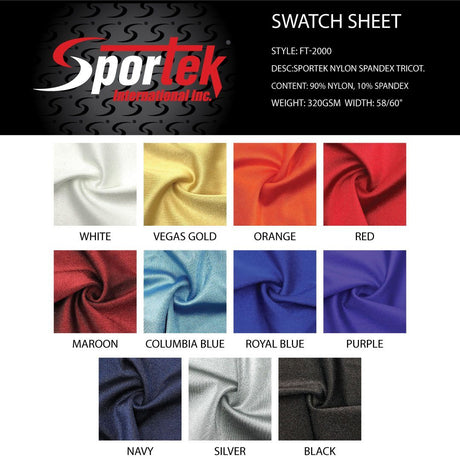
Spandex/Elastane Content: Even a few percent of spandex can dramatically increase stretch. Higher spandex content generally means greater elasticity and recovery. Typically, spandex is blended with other fibers (cotton, polyester, nylon, rayon, etc.) rather than used alone. Most "4-way stretch" fabrics are a blend like nylon/spandex or polyester/spandex. Swimsuit fabric is often 80% nylon, 20% spandex – the nylon gives durability and water resistance, the spandex gives 4-way stretch. Our nylon-spandex fabric guide covers how nylon-spandex constructions achieve this combination of smooth hand feel, strength, and 4-way stretch across all common activewear and swimwear applications.
Key takeaway: Knits tend to be soft and stretchy by nature, wovens need a bit of elastic help to stretch. And the magic ingredient making modern fabrics super-stretchy is spandex/elastane.
Measuring Stretch in Fabric
When shopping for stretch fabric (especially online or by the yard), you'll often see stretch quantified as a percentage. This percentage tells you how much larger the fabric can stretch compared to its relaxed length.
Stretch Percentage: If a fabric is described as "50% stretch," a piece of the fabric can stretch an additional 50% of its length. In practical terms, if you have a 10 cm sample, it could stretch to 15 cm before maxing out.
How to Measure: Cut a small swatch. Mark a 10 cm (or 4 inch) section. Hold one end firmly and stretch the other end until you meet resistance – then measure the new length. The formula is: (Stretched Length - Original Length) / Original Length. For example, if your 4-inch sample stretches to 5 inches before it's taut, that's (5-4)/4 = 0.25 = 25% stretch. You might find a fabric is 60% stretch horizontally but only 20% vertically – that's a clue it's a 2-way stretch. Our stretch fabric types page covers the step-by-step stretch and recovery testing methodology in detail, including how to calculate stretch percentage from a home test.
Recovery: Equally important is how well the fabric recovers (springs back) after being stretched. Good recovery means the material returns to its original size without staying baggy or misshapen. Fabrics with higher spandex content usually have better recovery.
Performance, Fit, and Comfort Comparison
Flexibility & Range of Motion: 4-way stretch fabrics provide the greatest range of motion. Because they stretch in all directions, they accommodate multi-directional movement – crucial for activities like yoga, dance, swimming, or anything athletic. 2-way stretch fabrics, while still flexible, might restrict certain movements if stretched the wrong way. In short, 4-way is usually preferred for performance wear where you need unrestricted movement. Our activewear fabric guide covers how 4-way stretch construction affects comfort and performance across all common activewear categories.
Fit and Shape: Because 4-way stretch can contour in all directions, it tends to create a snug, form-fitting silhouette. A good example is stretch denim jeans: they often only stretch around the body (making them comfy and form-hugging at the waist and hips), but they don't stretch vertically, so the jeans don't sag. 2-way stretch offers a moderate improved fit, while 4-way stretch offers a body-hugging fit.
Comfort: Both types improve comfort over non-stretch fabrics, but 4-way stretch is generally the champion of comfort for active use. Think of 2-way as giving you comfort in one plane (usually horizontal), and 4-way giving you comfort in all planes.
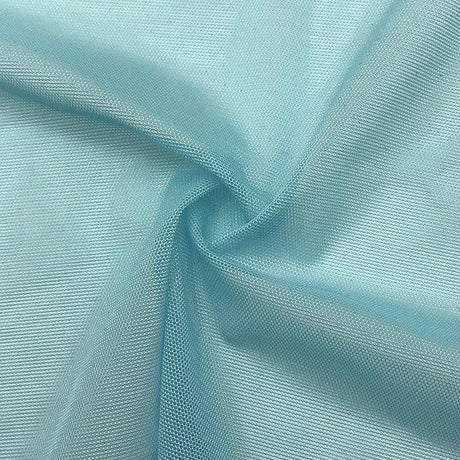
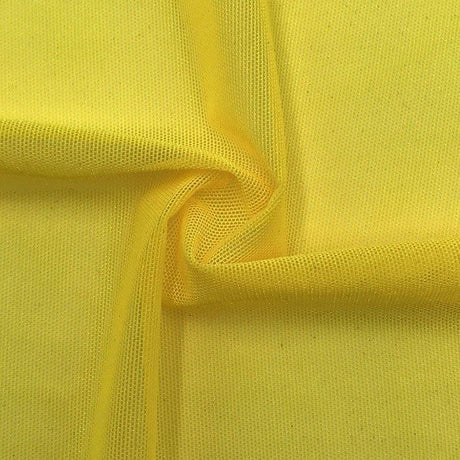
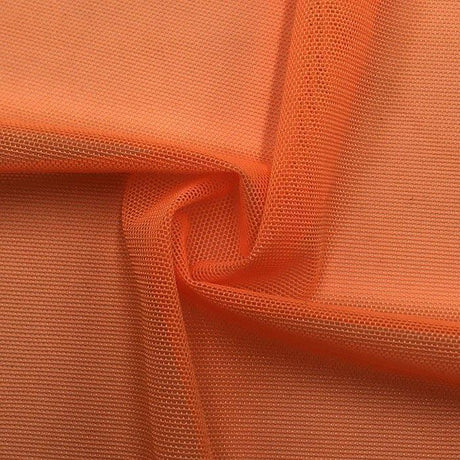
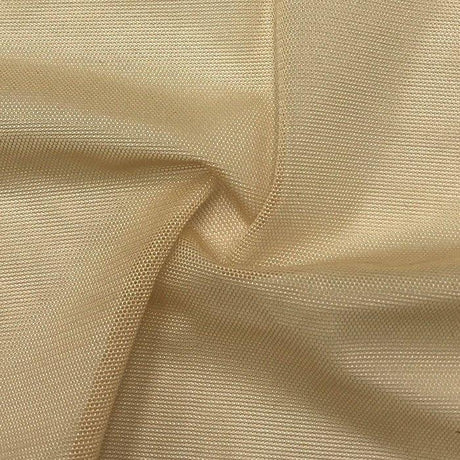
Support & Compression: If you need supportive stretch (like in shapewear, medical compression sleeves, or sports bras), a strong 4-way stretch is typically used. These fabrics (for example, powernet mesh or high-spandex knits) not only stretch but also exert compressive force to support muscles or shape the body. Our fabric weight guide covers how GSM affects compression, opacity, and support across all common 4-way stretch constructions.
Durability & Recovery: A quality 4-way stretch fabric with good recovery (thanks to spandex) will hold its shape over time and avoid getting baggy knees or elbows. Care helps: generally wash stretch fabrics in cold water and avoid fabric softeners, which can break down elastic fibers. Our spandex care guide and fabric care guide cover complete care protocols for all common stretch fabric types.
Common Uses and Applications
Common Uses for 2-Way Stretch Fabrics
Everyday Apparel: Many casual wear and career wear items use 2-way stretch for comfort without losing shape. This includes stretch jeans, chinos, and fitted skirts or dresses. The fabric stretches around the body (for ease when sitting or moving) but not so much lengthwise, so the garment still drapes nicely.
Woven Stretch Fabrics: Examples include stretch cotton poplin (used in fitted shirts or pants), stretch denim (jeans, jackets), stretch twill, and stretch satin (for evening wear or costumes that need slight give). These materials are popular because they sew and look like "normal" fabric but have a hidden comfort factor.
Budget Activewear: Some inexpensive leggings or sportswear pieces are actually made from 2-way stretch material (stretching mostly around the body) to save cost. They'll work, but might not be as comfortable for things like deep squats or yoga poses compared to true 4-way stretch gear.
Common Uses for 4-Way Stretch Fabrics
Activewear & Sportswear: This is the big one – virtually all modern athletic apparel utilizes 4-way stretch fabric. If you think of your gym clothes – yoga pants, running leggings, compression shirts, athletic shorts, swimsuits, cycling gear – they need to handle movement in all directions. Spandex is "added to almost all sportswear" to ensure freedom of movement and a great fit. Our activewear fabric guide covers how 4-way stretch construction interacts with moisture-wicking and breathability across all common activewear fabric constructions.
Swimwear: Bikinis, one-piece swimsuits, competitive swim jammers, boardshorts with stretch – swimwear fabrics are 4-way stretch by necessity. They have to move with your body as you swim and also withstand stretching without losing shape. Typically these are polyester or nylon with 15–20% elastane. If you're sewing a swimsuit, you must use a 4-way stretch fabric. Our swimwear fabric guide covers 4-way stretch construction requirements across all swimwear fabric types.
Dancewear & Costumes: From ballet leotards and ballroom dance costumes to superhero suits for cosplay, dance and costume garments benefit from 4-way stretch. Materials like milliskin tricot (nylon spandex), stretch mesh, and spandex velvet are commonly used for these purposes and all stretch in every direction. Our dancewear fabric guide covers 4-way stretch construction requirements across all common dancewear and performance costume applications.
Medical and Compression Garments: Medical textiles often rely on 4-way stretch for compression and support. Examples include compression stockings, abdominal binders, knee/elbow braces, and athletic compression sleeves. A 4-way stretch bandage or support wraps uniformly around a body part and adapts to movement without loosening.
Upholstery & Furniture Covers: A 4-way stretch vinyl can wrap around curves and corners without bunching, giving a smooth finish on a boat seat or car dashboard. Similarly, form-fitting slipcovers for sofas and chairs use 4-way stretch fabric so they can accommodate various shapes and then recover to look neat.
Tips for Working with and Buying 4-Way Stretch Fabric
Know Your Project's Requirements: Check your pattern or project needs to see how much stretch is required and in which directions. Many sewing patterns (for swimwear, activewear, etc.) will specify something like "use a fabric with 50% 4-way stretch." Using a fabric with less stretch than recommended can result in a too-tight or non-functional garment. Our how to choose fabric guide covers how to interpret pattern stretch requirements and match them to fabric specifications.
Check Fiber Content and Stretch Info: When browsing fabrics (online or in-store), read the fiber content and stretch details. Keywords like "spandex" or "elastane" are hints that the fabric will be stretchier and likely 4-way. A fabric listed as "perfect for swimwear, dancewear" is surely 4-way stretch. Our nylon-spandex fabric guide and cotton-spandex fabric guide describe how to identify key performance indicators from fiber content listings.
Order Swatches When Possible: A swatch lets you perform the stretch test yourself and check the drape and opacity. It's worth the small extra step to ensure the fabric meets your expectations for stretch and weight before committing to several yards. Our how to choose fabric guide covers what to evaluate when a physical swatch arrives, including stretch testing, opacity testing, and hand feel assessment.
Consider Weight and Opacity: Not all 4-way stretch fabrics are thin slinky knits – they come in various weights. If you need a fabric that holds you in (compression) or isn't see-through, look for descriptors like "heavy weight," "compression," or high GSM (grams per square meter). Our fabric weight guide provides a full breakdown of GSM ranges and how weight affects opacity, compression, breathability, and durability across all common 4-way stretch constructions.
Use the Right Sewing Techniques: Use a ballpoint or stretch needle in your machine. Employ stitches that can stretch – a narrow zigzag or a serger/overlock stitch is ideal for seams, and a twin needle can topstitch hems without losing stretch. Also, don't pull on the fabric as you sew. Our how to sew stretch fabric guide covers all construction techniques, needle selection, stitch type, machine settings, and edge finishing for all common 4-way stretch fabric types.
Plan Enough Yardage: Stretch fabrics are often knit in wider widths (58–60 inches is common for spandex knits). You may need fewer yards than a woven. However, if your pattern pieces must be oriented so that the greatest stretch goes around the body, make sure to account for that layout requirement.
Care Tips: Cold water washing and air drying are the safest for spandex-containing fabrics. High heat can deteriorate elastane over time, and fabric softener can break down the stretch. Our spandex care guide and fabric care guide cover complete care protocols for all common stretch fabric types.
Shop Smart – Look for Specialty Retailers: Specialty retailers that focus on stretch and performance materials often provide detailed info on stretch, weight, and recommended uses, and carry a wider variety of prints and types (from athletic knits to stretch lace). Have questions about specific fabric specifications? Our expert help and advice page and FAQ are always available.
Conclusion
Understanding the nuances between 2-way vs 4-way stretch fabric is key to picking the right material. To recap: 2-way stretch (one-way elastic) gives you flexibility in one direction and is great for garments where you want a bit of give but also some structured support. 4-way stretch (bi-directional elastic) offers all-around stretch, ideal for anything that needs to accommodate lots of movement or a very close fit, from athletic wear to medical supports.
Whether you're a designer planning your next activewear line, a cosplay enthusiast crafting a stretchy costume, or just someone looking for the right fabric for a DIY project, we hope this guide has demystified 2-way vs 4-way stretch. Embrace the stretch – with the right fabric, your creations will be comfortable, durable, and a perfect fit for their purpose.
Ready to find the right stretch fabric for your project? Use our stretch fabric types page to evaluate how spandex percentage affects stretch percentage, recovery ratings, and compression level, our fabric weight guide to compare weight and compression across all common constructions, and our how to choose fabric guide to build a complete evaluation framework. Our activewear fabric guide, swimwear fabric guide, and dancewear fabric guide provide end-use specific recommendations. Our how to sew stretch fabric guide covers all construction techniques. Sign up for SpandexByYard Rewards to earn points on every purchase – happy sewing and stretching!