A lack of a clear quality control process can have a devastating impact on your business. The risks are substantial and can lead to a significant financial loss. Before building your QC process, our how to choose fabric guide and FAQ page provide a strong foundation for defining the specifications your quality checks will be measured against.
1. Production Delays and Wasted Time: A problem with your fabric can bring your entire production line to a grinding halt. If you discover a defect or an inconsistency in the middle of a production run, you may have to halt production, causing significant delays, lost revenue, and a ripple effect of scheduling issues with your production partners.
2. Garment Defects and Returns: Inconsistent fabric can lead to a host of garment defects. A fabric with a lower stretch percentage may result in an ill-fitting garment. A fabric with an uneven dye lot can lead to a noticeable color difference between different sizes. These defects lead to a high return rate and a major hit to your bottom line.
3. Damaged Brand Reputation: Your brand's reputation is built on consistency and quality. A customer who receives a garment that does not fit as expected, has a noticeable defect, or loses its shape after a few wears will not only return the product but will also share their experience online.
4. Financial Loss: A bulk order of a subpar fabric can be a total financial loss. If the fabric is not suitable for your product, you will be left with unsellable inventory that ties up your capital.
A proactive quality control plan is not just about catching mistakes; it's about preventing them.
Part 1: The Pre-Purchase Phase – Your First Line of Defense
The best quality control happens before you even place your order. This is your first and most crucial line of defense against a bad purchase.
Step 1: Define Your Quality Standards
Before you start sourcing, you must have a crystal-clear idea of what you need. Create a technical specification sheet (tech pack) for your fabric that includes:
Fabric Composition: The exact blend (e.g., 80% Nylon, 20% Spandex). Our nylon-spandex fabric guide and cotton-spandex fabric guide cover the performance profiles of the two most common companion fiber choices, helping you define exactly which blend your product requires.
Fabric Weight (GSM): The precise weight of the fabric. Our fabric weight guide provides a full breakdown of GSM ranges and how weight affects opacity, compression, breathability, and durability – essential information for writing a defensible GSM specification.
Stretch and Recovery: The percentage of stretch for both the lengthwise and crosswise grains, and the recovery rate. Our stretch fabric types page covers how to measure, compare, and specify these numbers across all common spandex-blend constructions.
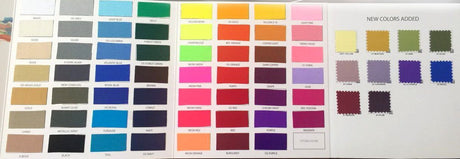
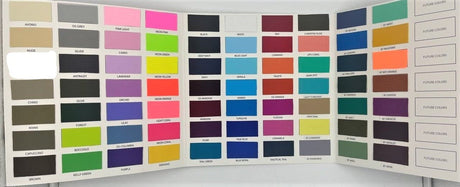
Color and Print: The exact Pantone color code or a physical color swatch. For garments intended for custom sublimation printing, our sublimation guide covers how base fabric color affects print accuracy.
Certifications: Any non-negotiable certifications (e.g., OEKO-TEX®, GRS). Our fabric guides hub covers both certifications and what to specify in your tech pack when they are a requirement.
Additional Properties: Any other properties you need (e.g., moisture-wicking, anti-odor, chlorine resistance). Our activewear fabric guide and swimwear fabric guide cover the performance property specifications most commonly required for activewear and swimwear tech packs.
This tech pack is your contract with the supplier. It is the basis for all your quality checks and a key to a successful partnership.
Step 2: Vet the Supplier Thoroughly
A reputable supplier is your best guarantee of quality.
Ask for Certifications: Ask for copies of their certification documents and verify them online.
Request Client References: Ask for references from clients in your industry to get a firsthand account of their quality and reliability.
Ask About Their Quality Control Process: Ask your supplier about their internal quality control process. Do they check every roll? Do they have a clear process for handling defects? Our expert help and advice page connects you with knowledgeable staff who can help you evaluate supplier claims and quality control documentation.
Step 3: Request and Analyze a Sample
Never, ever, purchase a bulk order based on a digital image alone. A physical sample is your best tool for a thorough quality check.
Hand Feel and Appearance: Check the hand feel, the true color, and the finish of the fabric. Is it matte or shiny? Does it feel soft or coarse? Our fabric finishes guide covers how to identify and distinguish different surface finishes when evaluating a physical sample.
Stretch and Recovery Test: Perform your own simple stretch and recovery test to verify the supplier's claims. Our stretch fabric types page covers step-by-step stretch and recovery testing methodology for evaluating fabric samples.
Wash Test: Wash and dry a small piece of the sample to check for shrinkage, colorfastness, and any changes in hand feel. Our fabric care guide and spandex care guide cover the correct washing and drying protocols so your wash test reflects real-world care conditions.
Part 2: The In-Transit Phase – The Quality Check on Receipt
Once your fabric arrives, a basic receiving inspection is crucial before you even think about putting it into your inventory.
Step 4: Conduct a Basic Receiving Inspection
Inspect the Packaging: Check the packaging for any signs of damage. If the cartons are wet or crushed, it may indicate that the fabric inside has been damaged.
Verify the Contents: Check the contents of the shipment against the packing list. Are the correct number of rolls, colors, and fabric types present?
The "Four-Point" Inspection System: This is an industry-standard inspection process. Pull a few yards from a few rolls and look for defects like holes, snags, stains, or inconsistencies. Also check for a consistent color across the rolls.
Step 5: Perform a Simple Lab Test (Stretch & Recovery)
The Test: Pull a small piece of fabric from a few different rolls and perform your simple stretch and recovery test.
The Benefit: This will tell you if the fabric is consistent across the entire shipment. If one roll has a different stretch percentage than the others, it's a sign of a potential problem. Our stretch fabric types page explains what acceptable variation looks like across rolls from the same production run vs. what constitutes a meaningful inconsistency.
Step 6: Check for Color and Consistency
The Test: Pull a few inches of fabric from a few different rolls and hold them up to a natural light source. Do the colors match? Are there any visible differences in the hue or the finish?
The Benefit: This is a simple visual check that can save you from a major color inconsistency in your product line. For garments that will be sublimation printed, this check is especially critical – our sublimation guide and sublimation paper pages cover how base fabric color consistency affects print accuracy.
Part 3: The Pre-Production Phase – The Final Assurance
Before the fabric goes to your cutting table, you must perform a final quality check to ensure a smooth production run.
Step 7: The "Rest" Period
The Rule: After the fabric arrives, let it "rest" for at least 24–48 hours.
The Reason: A roll of fabric can have a certain amount of stress on it from the shipping process. Letting it rest allows the fibers to relax and return to their natural state, which will prevent a costly mistake of cutting a distorted fabric.
Step 8: Conduct a Full Wash Test
The Test: Before you cut, wash and dry a larger piece of the fabric (e.g., 1–2 yards) according to your care instructions.
The Reason: This will provide you with a final check for shrinkage, colorfastness, and any changes in hand feel or performance. If the fabric shrinks, you can adjust your pattern accordingly. Our fabric care guide covers pre-washing protocols and what to look for in a pre-production wash test for all common spandex-blend fabric types.
Step 9: Perform a Sample Cut and Sew
The Test: Cut and sew a small sample of your final product.
The Reason: This is your final check for any issues with the fabric's cutting or sewing properties. Does the fabric cut cleanly? Does it sew smoothly? Does the finished product fit as expected? Our how to sew stretch fabric guide covers needle selection, stitch settings, and cutting techniques for all common spandex-blend constructions – essential reference for this stage of your QC process.
The Proactive Approach to Problem Resolution
If you do find a problem with your fabric, you must have a clear and fair return policy in writing from your supplier. This is your final line of defense.
The Process: Document the problem with photos and videos. Contact your supplier immediately and provide them with all the documentation you have. A reputable supplier will have a clear process for handling the issue, which may include a refund or a replacement. Our FAQ page covers our own return and defective product policies as a useful benchmark when evaluating any supplier's policy.
Conclusion
Ensuring spandex fabric quality in bulk orders is a systematic, proactive process that requires careful attention to detail. It is not just about a single check; it's about a series of checks that cover the entire purchasing lifecycle, from the pre-purchase phase to the final pre-production check. By implementing a rigorous quality assurance plan, you can transform the fear of inconsistency into a confident, predictable process that protects your investment and your brand's reputation.
A good supplier is a partner in this process. They will be transparent about their quality control and will be eager to work with you to ensure that every shipment you receive is of the highest standard.
Ready to explore a world of certified, high-quality fabrics? Use our fabric weight guide and stretch fabric types page to build your tech pack specifications, our nylon-spandex fabric guide and activewear fabric guide for detailed product information, and our how to sew stretch fabric guide for pre-production sample construction. Our fabric care guide and spandex care guide cover pre-wash testing protocols. Have questions? Our expert help and advice page and FAQ are always available. Sign up for SpandexByYard Rewards to earn points on every purchase – because integrity, transparency, and rigorous quality control are the foundation every great brand is built on.